Chapter Thirty-One: African Tour Pt. 2-Botswana & Zimbabwe

Day 13

Back on the road for another long day of driving. We hit the road at 7:30 and drove throughout the day, passing into Botswana, and arriving at our camp just shy of 5:00 p.m. This felt to be the most rustic campsite so far, with barebones washrooms and sandy grounds. This was exacerbated by the rain and humidity, but invited plenty of bugs and left us feeling sticky. Worth it though, as this is where we had a chance to meet a tribe of Kalahari bushmen, called the sun people, or the kwi kwi (not sure on the spelling). We had a walk with about ten of them through the bushes, where they showed us how they lived and, through a translator, explained about their diet, medicine and hygiene. They spoke in their native tongue, which is full of clicks, and fascinating to hear. The bush people had been forcibly removed by the government from their lands in the Kalahari, where they had a basic subsistence lifestyle, living off the lands as nomads. They fought back in court and won and the government, in turn, gave them proper accommodations in which to live. Though they still spend much of their time living off the land to stay true to their ancestry. After dark, they built a fire and showed us some traditional dances, to channel health and safety, as well as simply for entertainment. Spectacular end to a long day on the road!


Day 14

Today was mostly spent on the road. We arrived at our campsite, Swamp Stop (no joke!), in the late afternoon. We took a dip in the pool and just hung around. There wasn’t much to do and it was wet so there were plenty of mosquitoes. We had some drinks together in the bar in the evening but the bugs eventually drove me out.


Day 15

We started the day with a drive to the Okavanga Delta, a top tourist attraction in Botswana, where we would spend two days. This was an additional activity and quite pricey so we had high expectations. When we arrived, we learned that we just had free time all day until our evening boat ride. This was fine with me as it was rainy and I was feeling sick, so I just took a nap in the tent. The campsite was very pretty, surrounded by floating fields of papyrus plants and monkeys jumping from tree to tree. The boat ride was slow and beautiful, weaving our way through the canals of plants, where we saw many wild birds and crocodiles. Afterward, we had a nice dinner. It was a low key day but I was exhausted and still not feeling well so I made it an early night.


Day 16

Still in the delta, today started with a fast boat out to an island, where we boarded macoro boats, two by two. Macoros are like flat bottomed canoes but with a puller (poker?) who stood behind us and pushed the boat through the shallow waters with a long stick, like an African gondola. This was really special and peaceful, as we floated along past high grasses, lily pads and water lilies. A bunch of frogs no bigger than my thumbnail hopped in and out of the boat and a giant red praying mantis perched on my foot for the trip. We also had a small walk around the island and explanation of some local flora before making our way back to camp. The rest of the afternoon was, again, rainy and restful. We read, chatted and played some games, though I was once more very ready for bed once dinner was finished. I’m not sure this activity was worth the price tag on it, but it was indeed very scenic and relaxing.
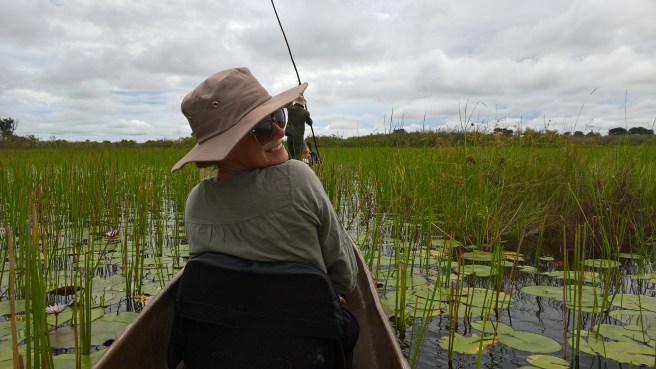
wp_20170127_10_36_17_pro


Day 17

We packed up and left the delta after breakfast and spent the morning driving, again crossing the Namibian border (just for one overnight). We got to our camp in the early afternoon with no plans so it was another restful day. There was a pool but it was a bit rainy and cool so we all just lounged around, reading, chatting and having some drinks. But what was really great about this spot is that it was right on the Okavango river and we could watch hippos playing in the water all afternoon. This was a very picturesque background for a low key day. We had a campfire in the evening after dinner and then went to bed, with a 4:45 wake up time ahead!
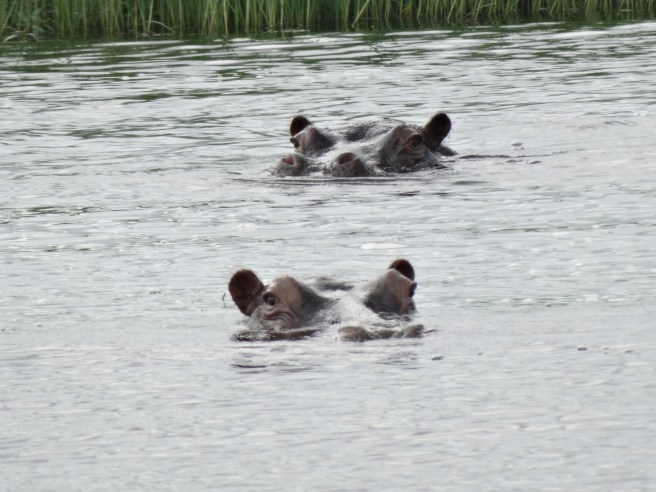
dsc02933


Day 18

We woke up this morning early and in the rain. We scrambled to get out tent packed in the dark and not get too soaked. The day got better as we drove along because we saw a troop of elephants by the side of the road!! There were four or five as well as a baby. It was so amazing; I wanted to stay all day. They are such beautiful, majestic creatures. Afterward, we crossed back into Botswana and arrived at our camp, in Chobe park, just after 1:00 p.m. We had an afternoon boat cruise along the Chobe river, where we saw hippos grazing and playing in the water, plenty of crocodiles, members of the antelope family, water buffalo and baboons on the shore. It was a terrific ride. We came back to the camp at sundown for our last camp dinner as a group, sausages, beef ribs, vegetables and garlic bread, and then all went to the camp bar for a couple of drinks before heading to bed.


Day 19

We started the day with a game drive around Chobe park (I was hoping to see more elephants!). It was a beautiful drive. We saw plenty of baboons, antelope, springbok, zebras, giraffes, warthogs, colourful birds, and buffalo, as well as gorgeous scenery of the lush green hills, brush and water. On the trip back from the park to the camp, we actually spotted more elephants along the roadside. This national park is among the biggest in the world as is reputed to have about 50,000 elephants. Much of it is protected and not for visitors. The parts we saw were spectacular. We had brunch at the camp afterward and then drove on to Victoria Falls, crossing into Zimbabwe. We visited the Victoria Falls park for a few hours, walking along the footpaths. Victoria Falls is considered one of the seven natural wonders of the world and is the largest waterfall system on earth. The pressure of the water and the narrow canyon that the water spills into creates a heavy mist which gives the falls an elusive and slightly spooky quality. It also means that you cannot view the whole stretch of falls with the naked eye. In fact, from some points, you cannot see them at all. This makes them appear a bit smaller, but when you are lucky enough to get a moment of clarity and a far view, it is truly spectacular. We also got soaked from the mist! Next, we visited a baobab tree that is massive and between 1,000 and 1,500 years old.

Afterward, we were brought to our hotel, which was very much needed after a week of wet and buggy camping. We showered and changed and then headed to a restaurant that the tour group selected for us. It was quite overpriced and underwhelming, and we believe we went as the guides got a kickback for bringing us, but that aside, we did get to try warthog (which tasted almost just like a pork cutlet) and crocodile steaks (which were quite nice! It was a white meat but not fishy, softer and more savory than chicken). And ended the night at a hostel bar in town with the group.


Day 20

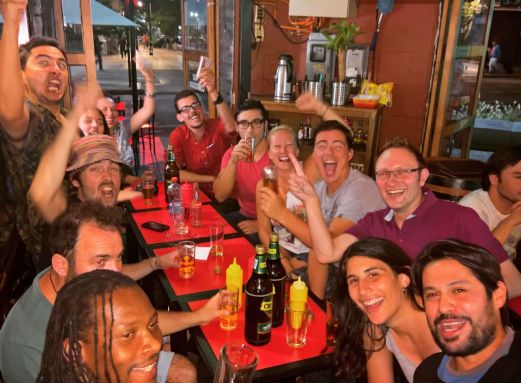
Today was a day to relax, starting and ending in a real room. We had a late breakfast with some of the group in the hotel, then walked around to explore the small downtown with a Swiss friend we made. We walked along the no man’s land bridge, between Zimbabwe and Zambia, and picked up some pizza and beers to eat back at the hotel in a small courtyard area. We spent some time at the pool and skyped with our parents. For dinner, it was the last night that we would spend with most of the group of twenty with whom we began the trip, so we made a reservation for the group at a fun patio restaurant we saw in town. It was a nice end to this part of the trip, having some drinks and laughs with everyone. It was a bit sad to say goodbye when we finally left, but we have plenty of adventures still ahead! ❤

Chapter Thirty: African Tour Pt. 1- South Africa & Namibia

Below is part one of three describing our 26 day tour through southern Africa, covering parts of South Africa, Namibia, Botswana & Zimbabwe.

Day 1

And we’re off! We got to the tour office at 6:30 a.m. to fill out some paperwork and then took off with our group. There are twenty of us and two guides, both from Zimbabwe. There are a mix of ages, from around twenty to mid-sixties. People seem pretty nice so far. The day started with a supermarket stop for snacks and water and then we started the drive north, toward Zimbabwe. We stopped at a beautiful vineyard called Spice Route for a wine tasting, and then stopped roadside for a simple lunch of sandwiches. We then drove on a few hours more and stopped at a citrus and roibus tea farm where we would spend the evening and set up for overnight. It was definitely far more luxurious than we were expecting (our experience camping on the amazon ruined us), with a king sized, brand new tent and mattress, swimming pool, warm showers and sit down BBQ  dinner (BBQing is also a cultural activity here, called braii). It was a good first day, though I am not expecting most days to be quite so comfortable.


Day 2

We had an early start and a lot of driving on this day. We stopped roadside again for a lunch and then drove on to cross into Namibia. We are entering the desert region and it is getting HOT. We arrived at our destination around four p.m., which was a beautiful riverside settlement with a pool, large green lawns for camping, showers and a bar. It was almost like a small resort, with straw huts for eating and relaxing. We went for a swim in the river and then in the pool. We had a nice grilled fish dinner and then had some drinks at the bar with a few of the people on the tour, from Brazil, Germany, Switzerland, Holland and Italy.


Day 3

The day started out leisurely. There was an option to book a river canoe trip for the morning, and those of us who stayed behind lounged around the pool, reading and napping. The pool is on a balcony that looks over the river with a thick brush on both sides, so it was an idyllic place to spend a couple of hours. I did some yoga in the grass and then we had lunch before getting in the truck and heading on. We drove a few hours and entered the Namib desert, though it was still rocky and not yet dunes. We set up camp in a remote site that was slightly more bare bones than the previous two days, but still had a small pool. In the evening, we drove out to the nearby fish river canyon, which is the second biggest canyon in the world (after the grand canyon), where we had a small hike and then cracked a couple of beers and watched the sun set over the land. There was a very rich beauty to it and I want to absorb it all. We returned to the camp for a beef stew dinner and then walked down the remote road past the lights and watched the stars, which were amazing and everywhere. We also saw a moonrise. It was a spectacular end to the day.


Day 4

I woke up at 1:00 a.m. because someone in a neighbouring tent was snoring and I wasn’t able to get back to sleep. We had breakfast and left at seven and had a long day of driving, stopping for lunch and to stretch our legs. The highlight of the drive was seeing four giraffes on the side of the road. They were so large and majestic. When they run, you can see how the vertebrae in the neck move; it’s really fascinating. Around four or five, we got to our destination and did a short hike through a small canyon. The views inside were great, though it was quite hot! We had entered the Namib desert, but were not yet at the dunes. We set up our tents, had a swim in the pool, ate dinner and called it a night. Not my favourite day so far, but the giraffes were really fantastic.


Day 5

This was the best day so far! We began with driving to the sand dunes, hiking up dune 45 and watching the sun rise over the desert. We then had a hot breakfast at the base of the dunes, followed by a tour to deadvlei, which is a spot in the desert where, due to wind currents, there is no sand on the ground, only white clay, and trees that have died and been preserved in this dry and arid location for over six hundred years. Set to the backdrop of the fiery orange sand, the trees and the white ground look other-worldly. We went back to our campsite to pack up and have lunch and drove on to the next camp, set in a very barren-looking part of the desert, with Seuss-like trees sparsely populating the area. There was a pool that we not so much swam in as sat in, given that it was a foot deep, but it did the trick and cooled us off. For sunset, we had a drive through the desert ‘farm’ by the camp owners, who shared with us survival tactics, stories about the bushmen who uses to inhabit the land, and drove us around, following herds of zebra and oryx. He told us we could sleep safely outside at night, out of our tent, and there was a watering hole at the camp where the animals would drink from. A bunch of us brought down our sleeping bags and spent the night about twenty meters away, under a blanket of stars, and fell asleep watching the zebras come and go. (I tried to narrow down the photos as much as possible!)


Day 6

The first half of the day was spent packing up and driving to the coastal town of Swakopmund, where we would have actual accommodations for two nights and be on our own to book any tours we were interested in, in the area. We stopped on route to stretch our legs and take photos at Moon Valley, where there were nice rock formations, and in the town of walvis bay, to see the flamingos at the shore. I’ve always wanted to see the skeleton coast of Namibia, in particular the shipwrecks on the foggy ocean shores, where they meet the desert but I didn’t think we would get a chance to on this trip, as it wasn’t a tour stop. To see the best of it, you need a chartered plane to fly you into the national park and stay for a few days, but I was still lucky enough to find a tour that would drive along some of the coast and visit a shipwreck. A bunch of us wanted to do the tour so we split into two groups to go over the next two days; Jasper and I on the latter day. Then we had some time to just relax, shower and hang out at the bar before we all went out to dinner. We split a calzone with springbok meat (the national animal of SA, a lot like a deer or antelope) and pasta with fresh shrimp. Both were amazing. Then we all went to the bar next door for drinks and dancing the night away. It was nice to relax and blow off some steam after such a packed schedule.


Day 7

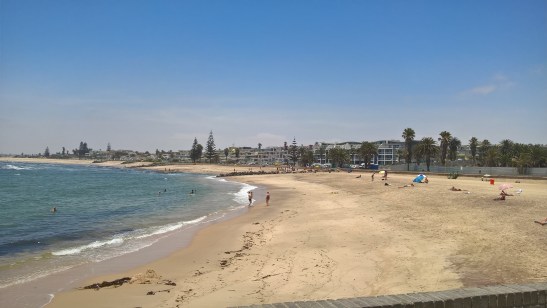
Today we did almost nothing. We slept in, had breakfast (bacon and eggs!), got a picnic and went down to the beach then came back to our room and had dinner. With naps interspersed. It was much needed.

wp_20170118_13_59_13_pro


Day 8

Today was our skeleton coast tour. Seeing the shipwreck was so spooky and cool. The coast is heavy with fog and wind, which is the reason so many ships have gotten disoriented and ended up on the shores. To land in the desert with no food or water for days pretty much sealed the deal for them. At the national park, they actually exhibit the bones of the unlucky crews to wash ashore. Our tour went beyond the shipwreck and showed us around some of the local townships. Our guide also brought us to the largest sea lion colony on the coast, and possibly in the world. There were tens of thousands of them, mostly newborn pups. The smell was almost unbearable but the sea lions were amazing. The little ones were learning to swim and had big doey brown eyes. They sounded like little lambs when they spoke. We finished the day tour at a nice beach where people were paragliding and had some lunch and  cold beers.

The eight of us in the sub-tour met the group from the main tour and got back on the road, driving the 2.5 hours to Spitzkopen, a desert town and camp with rock mountains, where we saw rock wall paintings made by bushmen that dated back 2-4000 years. We climbed up a table mountain to see the sunrise and then returned to camp for dinner. Again, we opted to forgo the tents and sleep under the stars. It rained lightly a couple of times in the night, but we just waited it out and stayed mostly dry.


Day 9

We had a lot of distance to cover today so the morning and afternoon were spent driving towards etosha park. We stopped at a small himba village on the way. The himba are a tribe that covers themselves in crushed red stone mixed with fat as a sun protective layer. They have the clay in their hair as well, which are done up resembling large dreadlocks and they often wear only a loincloth and jewels for adornments. They subsist on very little water and “bath” with herbed smoke. We were excited to visit but a bit disappointed when we arrived that it felt incredibly voyeuristic. There are many himba people but we visited a small tribe of about twenty. Two tour groups were joined so we had more white tourists than natives. We were also heavily encouraged to take lots of photos of them and buy small handicrafts that they were selling. I bought a bracelet as a souvenir but doubt that it was made by them personally. Overall, it felt invasive, though it was still something that I am happy to have seen. In the evening, we just relaxed and played cards and had a swim in the pool.


Day 10

We entered Etosha park and spent most of the day doing game drives (riding around the park looking for animals). No lions or elephants so far but we did see lots of zebras, giraffes, springbok, impalas, oryx, cudos, ostriches and plenty of wild birds. In the afternoon, we saw a rhino (though quite far away). In the evening, we swam in the pool and had BBQ beef ribs and springbok sausage for dinner and then, after dark, went to the watering hole in the camp and saw four hyenas coming to drink. We also spotted a honey badger on the walk back to the tent, though it was too fast to get a good look for me. I am starting to get used to vast, beautiful lands and wild, exotic animals. It will be hard to leave this place.


Day 11

Today was another almost full day of game drives. We had a lot of success: We saw hyenas and a rhino up close, jackals and lions. We saw a freshly killed zebra and a lioness beside it with blood on her face. We also saw two lions at a watering hole with carcasses and bones lying all around. It was gory but really fascinating. We saw lots more of the animals from the previous day as well. And, again, our campsite had a pool and bar so we spent a relaxing evening there.


Day 12

We spent the morning and early afternoon driving to Windhoek. It felt a bit long and was a hot day. When we arrived, we were told we would have a city tour in a bus but it turned out to be a walk around the corner in a not-so-exciting part of town. It was a disappointment as it was all we would see of the city. We had about twenty minutes to pop into a historical museum but could only see a small part. We stayed in a lodge out of the city, which was beautifully situated on a small pond with geese and turkeys wandering around and rolling fields in behind. Dinner was not included so we all ate at the lodge restaurant which was quite good and generous. I had springbok carpaccio to start and an oryx steak as a main. Both were really nice! It was the last night for two guys in the group so we had some drinks all together and celebrated, but I was more than ready for bed by the time we said goodnight at 10:00 p.m. These early mornings are still taking some getting used to; the standard wake up time is 5-5:30 a.m.


Stay tuned for parts 2 & 3 of the tour, coming shortly! ❤

Chapter Twenty-Nine: Cape Town

Cape town is a beautiful city surrounded by an unfortunate political rhetoric. Set on the southwest tip of the continent of Africa, it is surrounded by ocean and mountains and is incredibly scenic. We spent a sleepy first day exploring the city: The popular long street, brimming with pubs and restaurants, the tranquil city gardens and the historical District 6 museum, which outlines the history of this particular neighbourhood and the forced removals and segregation that it endured under the apartheid state. We then meandered around, stopping at a cute café or pub here or there and went for fantastic sushi for dinner (there would be plenty of time for local dishes!). Throughout the day, though, we had the curious observation that almost everywhere we went, we were surrounded only by other white people. I thought apartheid was over? We came to realize that a massive racial divide still exists here. I can’t be sure whether we saw so few black people in these places because of primarily social or economic reasons, but I would guess it is some combination of the two. Whenever we had the chance to speak with locals or read up on the current climate, it added a little colour to the situation, which is really the result of eleven different ethnic groups being systemically pitted against each other for generations to further backwards political agendas. There is also massive distrust and dissatisfaction in  the current government. We were both sad to see that the country had not come further in terms of integration, though these things do take time and are incredibly complicated.

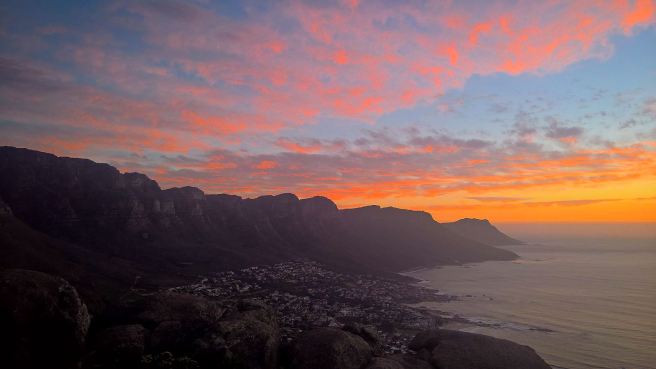
We enjoyed our time nonetheless, taking in the sights and climbing Lion’s Head mountain to catch a spectacular sunset.

13488585-de4d-424c-9845-d39f0f05b350

We took a ferry to Robben Island, to visit the prison where Nelson Mandela (and so many others) served a term of his 27 year sentence for political crimes. The tour was particularly interesting as it was led by a former political prisoner who, himself, had served many years there.

My hope for this beautiful country is that they get strong leadership that can continue in Mandela’s footsteps to bridge the divide between the various ethnic groups before tensions’ escalate further.

We took a train to the nearby surfing town of Muizenberg, where we spent four days hanging out on the beach, trying some local food (including polony and vetkoek sandwich, below) and really basking in our laziness before embarking on or 26 day tour through South Africa, Namibia, Botswana and Zimbabwe. ❤


Chapter Twenty-Eight: Argentina Pt. 3 (Buenos Aires)

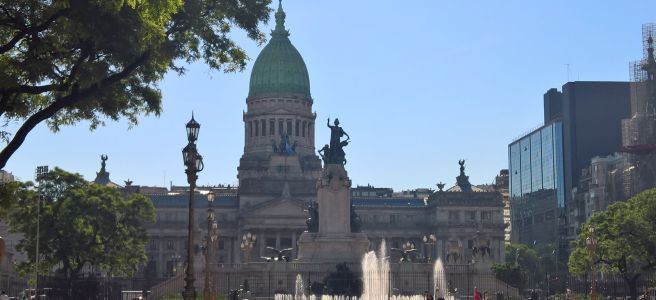
The best word I can use to describe my initial impression of Buenos Aires is grand. Arriving at the seaport via ferry, the boulevards were large and the streets were multi-laned and massive. There were parks, statues and works of art that dotted the trail to our hostel and people everywhere. My overall opinion changed as we spent the next week in this city, exploring the lavish Recoletta neighbourhood, the colourful and vibrant La Boca, the always-busy and usually seedy Monserrat, the ultra-hip San Telmo and some of the poorer areas which were just around the corner from the affluence. In short, Buenos Aires has some of everything. And the upper class is in an entirely different league that the middle and lower.

wp_20161228_12_11_50_pro

We spent the first two days on our own actively trying to do and see nothing of importance! Jasper’s parents (Jan and Annemie) were arriving on the 29th for a short but wonderful visit and we wanted to save all the best sightseeing for when they arrived. We ran some errands, ordered a super-pancho (hot dog with chips that is sold everywhere in Argentina), checked out the pub scene and searched fruitlessly for sushi for two days. But we reasoned that it has been and would continue to be a busy journey, so some downtime is nothing to feel overly guilty about.

When Jasper’s parents arrived, it felt really nice to be with family. We did some sightseeing (they had organized a half-day tour),  we went to a tango show, walked around and went to the MALBA museum, but we also just took lots of time to sit on patios and relax and catch up. We stayed in a beautiful hotel and had delicious food, and for four days, we forgot that we were dirty backpackers on a budget. It was heaven.

We had New Years’ Eve dinner at a restaurant around the corner from the hotel and it was entertaining (they had dancers) and delicious – a great way to begin 2017! From our hotel room, afterward, Jasper and I watched the fireworks all over the city of Buenos Aires.

img-20170109-wa0020

When Jan and Annemie left on January 2nd, we both felt very ready to move on as well. We felt that we had spent a good amount of time in South America and had a good feel for the area. We have seen so much and traveled so far in our time here that it is hard to believe that it was only three months. But we were both excited for the next part of the adventure. The next day we would be flying to Cape Town (via Brazil and Angola) to kick off a month in Southern Africa. We spent our last night in Argentina doing a tango lesson, which felt like the perfect way to cap off that part of the world.

66c64295-a851-4018-b7aa-e3c75ada40ee

Happy New Year!! ❤


Chapter Twenty-Seven: Uruguay

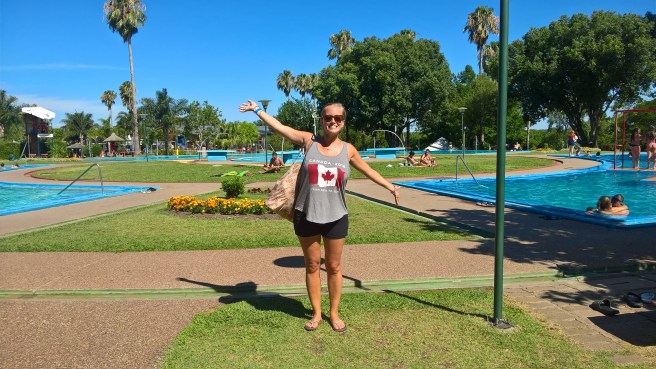
After our final overnight bus from Iguazu (yay!) we rolled into Concordia, Argentina, on a sunny morning and took a short bus through customs and across the Rio Uruguay to the small city of Salto. We bussed another 8 km out of the city to a hamlet called Termas del Dayman, named after their much renowned “hot springs,” which ended up being more of a low-key water park with warm pools than the beautiful natural springs we were expecting, but it was enjoyable nonetheless.

wp_20161219_16_00_22_pro

We were looking for a pleasant little town to spend a few days in before Montevideo and this was one of only three that was even listed in our guide book (I guess Uruguay is not the hottest of traveler destinations). Termas is about the size of two football fields, though even that may be generous, but it was lovely and serene and a nice low-key stop for a couple of days. Even our ho(s)tel was picturesque and had a lovely terrace. And we were able to have another asado (BBQ) for dinner!

We spent a half-day wandering around the city of Salto but a half day was more than enough to cover it. Would you ever choose this as your vacation destination? No. Was it a pleasant place to pass through and unwind? Certainly.

We bussed on to the capital city of Montevideo. We had heard it was reputed as a more laid-back version of Buenos Aires, so we had high hopes. While there were certainly nice parts of the city, we found it overall to be a bit rundown. The highlights we had read about, such as the central market, old square and popular streets for bars and restaurants were overpriced and underwhelming. I will confess here that our three dinners on the three nights we stayed were as follows: McDonalds, steamed hot dogs and scrambled eggs with avocado. I’m not particularly proud of this.

We did make the most of it, and spent a day down on the beach. The water was brown and we both got severely sunburnt, but, it was still a beach day in December, so life is good. We explored the old town and found a charming old café to relax in and Jasper was pleased to find a heavy metal bar in the evening (where we were the only patrons).

The highlight was the tango/music show that we went to on the last night at Baar Fun Fun. It was a small, divey old bar and the stage was small but there was some fun local music and great tango dancing. This I would definitely recommend to anyone going to Montevideo.

On Christmas eve, we bussed on to the small colonial town, aptly named Colonia del Sacramento (or just ‘Colonia’ by those in the know). This was the highlight of Uruguay for me and one of the most beautiful cities we have been to so far. Before we came to South America, I spent a fair amount of time looking up nice places to spend Christmas that would work with our travel itinerary, so I was very pleased that Colonia lived up to expectations.

There are two things, and only two things, to do in Colonia as it is equal parts small and beautiful: walk around and eat. Luckily, that is really all we planned to do, expecting that everything on Christmas would have been closed anyway. We wandered around the waterfront old town on the evening of the 24th and sat outside for a drink on the cobblestones. We went to the supermarket to get some wine, “champagne” (which tasted like cough syrup and we had to dump it; luckily, it was only $4), and a big spread of meats, cheeses, nuts and snacks to have in our hotel room, while listening to Christmas carols.

The plan was to spend Christmas day lying by the pool, but mother nature had other plans, so we cozied up in the hotel while we waited for the rain to subside, which it did, just in time for dinner. We did jump in to pool in the rain and do a few laps, just to say we swam on Christmas day, but the hotel staff definitely thought that we were crazy. The truth is, it felt more like Christmas was happening only at home, not where we were, and we were just away for it this year. But we did try to get into the spirit. It was a bit hard to be away from family but we knew that we were doing something amazing and that is a small price to pay for a year of travel.

For dinner, we sat outside on the patio of a vibrant little seafood restaurant with live music that was just across from a church, finishing up it’s Christmas service. It was a beautiful end to the day and a Christmas that we will long remember. ❤

Chapter Twenty-Six: Argentina Pt. 2 (Mendoza, Cordoba & Iguazu)

Wine and meat. That is what Argentina is known for and no place better demonstrates this than the Malbec capital of Mendoza. Argentina is the fifth-largest wine producer in the world, specializing in Malbec, which is predominantly produced in the vineyards of Mendoza. The region is the main producer of Malbec worldwide. I have explained that we love us some quality culture, and if that happens to mean sampling many different wines, I will do it, for the cause. We booked an afternoon tour which took us to three very different wineries in the region, as well as one olive oil and balsamic vinegar production centre, for tours and tastings. It was quite nicely done as it gave us a chance to see the different types of facilities (from old and rustic, to massive plantion, to super modern) and different wines.

The city of Mendoza is mid-sized but a day of walking around the streets and the large park is really enough. We spent some time sitting outside, enjoying the weather and the wine, on patios along the main promenade and, of course, we had to go out for authentic Argentine BBQ – “Asado.” We heard that asado in Mendoza is unique as the grill is heated with woodchips, rather than charcoal. I’m not sure I could taste the difference, in any case, but it was reason enough for us to try it! (Vegetarians, stop reading here.) We ordered the chefs plate, which was a heaping platter of all different sorts of meat (along with a salad bar and caramel flan for desert). It was a good first asado, because we got a good idea of what to order for next time. This one came with pork, beef ribs, flank steak, black sausage, white sausage and a coiled bit that was some sort of organ, I suppose, but too chewy for me. This paired well, of course, with a bottle of local Malbec.

Not so far from Mendoza is Cordoba, Argentina’s second-largest city. We arrived here following a 22 hour bus ride from Bariloche, in the lake district. The bus was nice and even served warm meals and showed movies in English. Unfortunately, there were also some very rambunctious children and a baby that threw up twice just behind us. “All part of the adventure!”

We walked the 40 minutes to the AirBnB that we had booked, only to find out it did not exist. Or, rather, it did, but was another 300 km away and a glitch with the site showed it listed in Cordoba. We found wifi and booked another room in a hostel and got there to find out that they were without electricity and water. Discouraged, we booked yet another hostel room, which took us back, in a giant loop, almost to the bus station where we began. We arrived to hear that the room we booked was not available, but we could sleep in the dorms, where there also slept literally the loudest snorer I have ever encountered, as well as a bunch of biting insects in my bed, which kept me up all night long. Needless to say, we found a fourth (!!) hotel for the next two days, and I am happy to report that it was quite pleasant.

Rough start aside, Cordoba is a very nice city to walk around in. There are plenty of beautiful churches and cathedrals, an interesting park celebrating their bicentennial with colourful rings, a nice central plaza and a very lively neighbourhood called Guemes that was bustling at night, with restaurants, patio bars and an artisan market. We went there for an evening and Jasper surprised me with a bottle of champagne. 🙂 It was also 25+ degrees and sunny, so we spent our days just rambling along, stopping at patios, making nice meals and taking it easy.

Following Cordoba, we took our second last overnight bus trip in South America (the countdown was on!) to the northeast sliver of Argentina, which borders both Paraguay and Brazil, called Puerto Iguazu. It’s really an amazing part of the continent as you can walk to the riverfront and literally look out to both bordering countries, which are just over a stone’s throw away. Below is a photo taken from Argentina, with Brazil on the right and Paraguay on the left.

But the real spectacle to see here were the Iguazu falls, which comprise the largest waterfall system in the world. Knowing that fact is one thing, but seeing them for ourselves is quite another. The scope of them was so magnificent, it truly took my breath away at first sight. Both Jasper and I agreed that this was among the most fascinating sights we had seen in our lives. I suppose that makes the bus trip worthwhile…

The photos speak for themselves, but even these cannot truly capture the magnitude. If you have the chance to visit, from either Brazil or Argentina (as the falls run between both countries), do it! We also met some furry friends in the park.

Aside from the falls, there is little to do and see in the town itself, but prices for rooms were low and just about every hotel in this hot, sticky city comes with tv, air con and a pool. Ours even had two! They also had a BBQ buffet and there was a cute little restaurant down the road that did daily lunch specials so we took advantage of some down time and worked on nothing but our tans for a few days. ❤


Chapter Twenty-Five: Argentina Pt. 1 (Tierra del Fuego & Patagonia)

Life is impossibly beautiful these days. We crossed over from Chile to Argentina in the large archipelago on the southern tip of both countries known as Tierra del Fuego: Land of Fire, named so as, when it was discovered by a Portuguese explorer in 1525, the explorer first saw the many campfires on the land, tended to by the aboriginals.

It is not an exaggeration to say that everything has been stunning since. On a ferry ride during the journey, we saw small black and white dolphins jumping beside the boat. We arrived in Ushuaia in the evening and went to our AirBnB which was a cozy apartment about a 45 minute walk from the city centre, along a dirt road with snow-capped mountains jutting up in the background. We explored the city the next day which, despite the cold, was incredibly pretty. Colourful houses, horses, the Beagle Canal waterfront leading out to the South Pacific, and mountains; it was like something out of movie. I believe this was nicer than any Alaskan city we have seen. Add that to the fact that it also happened to be the end of the world, save icy Antarctica (which was only 1000 km away), it made it a truly magical destination.

It is no surprise, then, that it was also quite pricey. But we decided to share some king crab crepes and local beers and enjoy the moment.

wp_20161127_12_47_12_pro

The next day we arranged a tour out by minibus and then by an insanely bumpy boat (I still have bruises) out to an island which hosts several colonies of penguins. Penguins!! There was one king penguin, several gentoo penguins and hoards of magallanic penguins. The latter were the ones which we were able to see very close up. They were walking all around us and not very shy. It was amazing – they are such fascinating creatures! They walk around together like businessmen having a meeting on the fly “…that’s what Rockefeller said but the supreme court is not swallowing it.” It was a special day.

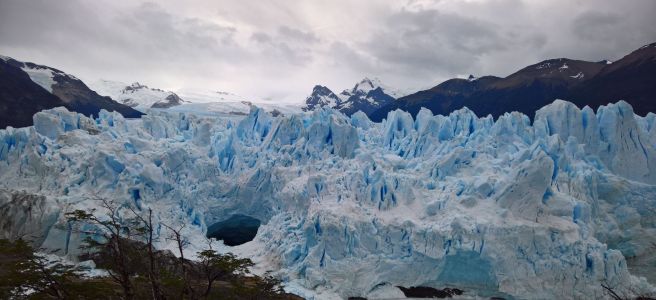
From here, the plan was essentially to head north in Argentina until we hit Iguazu falls. So our next stops were El Calafate and El Chalten, both in the Patagonia region. The highlight of El Calafate was the Perito Moreno glacier, which lies about 80 km out of town. We took a bus there, which drops you off for 4 hours before taking you back to the town. Having seen many glaciers before, we wondered if 4 hours to stare at this one in particular would be quite a bit longer than necessary, but it was not at all. The scale of it alone is breathtaking. Up to 70 meters in height, several km long, you can only see a small portion of it, which is still enormous. The park is very well done (which you would hope at $30 a person), and they have a labyrinth of walkways so that you can get up fairly close to the glacier at different vantage points without feeling swarmed by the other tourists. Right before leaving, we saw a massive piece of ice break free from the glacier and crash into the water, which was both incredible and sad.

The town of El Chalten is only 31 years old (same as me), and was created to give backpackers and trekkers a place to stay within Los Glaciares National Park as a jumping off point to hit the trails. So it is very picturesque, but entirely touristic and overpriced. We did one shorter hike to a waterfall and one full day hike which was 20 km roundtrip and peaks (pun intended) with a mountain climb to get a gorgeous view of a secluded glacier-fed lake in the mountains. The drawback was that it was quite windy, cool, and rainy as we made this ascent, but the view proved worthwhile.

As I write, we are heading, via 23 hour bus ride, to the lake district, in northern Patagonia, where we hope to find some fresher produce (as we are getting slightly tired of boxed wine and tomato pasta), lower prices and less wind. But it has certainly been an incredibly couple of weeks.

img-20161231-wa0014

We arrived, tired and cramped, in the small Swish chalet-styled ski town of Bariloche. The town is situated in the middle of hundreds of stunning vistas and the weather was a very comfortable 20 degrees and sunny. Bariloche is a mid-sized city and has everything you need to make or buy a decent meal, which is a nice change of pace from the south. Outside of ski season, most tourists use it as a jumping-off point to do the seven lakes drive (camino de los siete lagos), which takes you through a handful of small towns and is known as one of the most scenic highway drives in the country.

On our first full-day, we explored the town, which mainly consists of seeing the church and the chalets and then eating chocolate and drinking craft beers (ever the eager culturalists that we are) and then we found an agency to book a tour of the lakes and small towns. This can be done in a day and they are meant to pick you up at reception. We then got a hearty amount of asado (BBQ meat) and a box of wine and went to bed relatively early, so that we could get picked up at 8:00 a.m. for our tour. When the mini-bus never arrived, we went back down to the agency to discover that a) they had listed the wrong hotel and b) the bus had already left for the day, we were a little upset. We had already bought an onward bus ticket for the following day, thinking we would have seen all that there was to see, and it couldn’t be extended, so we were unable to do the tour a day later. In any case, we wanted to make the most of it, so we picked one of the small towns, Villa la Angostura, and bought a regular bus ticket. We covered some of the scenic drive and saw a few of the lakes. The town itself, though kitschy and overpriced, is situated on a beautiful lake, with two beach fronts, so we spent a couple of hours just exploring and hiking around.

I think we were able to get a good sense of the environment and I do imagine that the other small ski towns on the route would have been quite similar (which google image confirmed).  But it might mean that we need to go back one day. Maybe in the winter! ❤

Chapter Twenty Four: Chile

Chile started on a low note for us, with the US presidential election. We had bought wine and snacks and made friends with an American couple staying at our ho(s)tel and were excited to watch the results come in. Between the spotty internet and the bad news coming in with each click on the ‘refresh,’ the night ended on a somber note that we were certainly not expecting. The next day was also a bit glum as we couldn’t shake the implications of what had happened. Luckily, we got to feel glum in the picturesque setting of the Atacama desert in the town of San Pedro de Atacama (SPA). The town itself is quite touristic and serves as a jumping off, or finishing, point to a number of local tours, including the one we had just finished. There is a by-law in the city, restricting the use of artificial lighting and electricity so it has a very rugged, natural feel to it. A very rugged desert town, where you can get pizza, sushi and cappuccinos. Yes, we did! The roads are dirt and the red mountains rise along the sides. We had allotted two days of relaxing after our tour so we meandered around and ate some good food and relaxed at our beautiful accommodations with a lovely patio space but very eclectic owner who kept forgetting things that she told us shortly after.

From SPA we took a very picturesque (through the bizarre rock formations known as Moon Valley) but long 27 hour bus ride to the seaside city of Valparaiso. Valparaiso has a gritty but beautiful bohemian appeal to it. Smattered with art on houses, bridges, walls and very colourful buildings, as well as many, many stray-but-friendly dogs, it was a nice treat after the desert. We had some trouble finding our hotel, but when we did, we were able to sit on the patio and look down the hill over the town and the Pacific ocean. The city is also known for its artistic and beautiful ‘ascensores’ (funiculars) that take you up and down the steep hills. Sadly, there was a government-worker strike for much of the time we spent in Chile, so these were not operational. Which just meant slightly more calorie-burning for us as we hiked up the stairs to explore the main hills.

Valparaiso is really a wandering city, best to explore on foot and at leisure. Its sister city, Vina de Mar, is a short bus ride away and much more resort-styled. We spent a day there, walking along the beaches and eating amazing ceviche and salmon. We didn’t find much nightlife, so we got a $4 bottle of wine and settled in for the night.

The next day we went on to Santiago, the capital city. We were both really impressed by the modernity of it. It really appears to be a first world city – clean and large with amazing museums, bountiful markets, well kept gardens and terrific infrastructure. We were surprised to hear that there is still a massive income inequality gap here as it appears to be quite affluent throughout. It is, in any case, a great city to spend a few days in. They had an amazing new museum on the Pinochet dictatorship and human rights abuses. We did two different walking tours, both with excellent guides. We joined one of them, along with his friends, after our tour to watch Chile vs. Uruguay in a world cup qualifier game. Luckily, Chile won so the bar was alive and everyone was celebrating with calls of “Chi-Chi-Chi, Le-Le-Le, Viva Chile!”

img-20161211-wa0044

We also had some local dishes: pastel de choclo (like a shepard’s pie but with mashed sweet corn instead of potatoes) and two seafood dishes, one like a mixed seafood in broth and another that was like creamed stew with crab.

(From here we dipped over into Mendoza, Argentina for a few days because we had time to kill before our flight to southern Chile, but I will save that for my Argentina blog.)

We took a short flight to Chilean Patagonia, to the town of Punta Arenas, as it is not really accessible by bus, due to all of the lakes and lake of proper roads. Really just our jumping off point to cross into Argentina, we didn’t find much in the town itself, aside from overpriced food and laundry. We walked along the waterfront and explored the town, but the highlight was probably having food and wine with some new Czech friends that we met at our hostel in the evening. And with that, we were ready to move on from Chile. ❤


Chapter Twenty Three: Bolivia Pt. 2 (Santa Cruz & the Salt Flats)

Getting out of Rurranabeque was not quite as peaceful as arriving. It started with twelve hours of mini-busses across a road that appeared as though it was being made as we drove along. Really just a somewhat flattened strip of dirt with machinery dotted along the shoulders, the debris flew in the windows constantly at Jasper and I in the back seat as the windows were kept perpetually open. At dusk, dirt was replaced with large beetles that landed on and around me. Suffice it to say, it was a relief to get to Trinidad, where we would be boarding an overnight, proper, bus. However, when we arrived, we learned that all busses leaving that night were sold out (of course you can’t book online, don’t be silly!), but we were offered two unofficial “seats” in one of them by the driver, for cash. This turned out to be the nook behind where he sat, which, not only dirty and smelling heavily of body odor, was frigid cold and our bags were stowed in the back already, to which we had no access. We spent the night awake, taking turns blocking the AC vent with our bodies and shivering together.

It was our final penance, I suppose, as we spent the next five days in private-bathroom’d, air-conditioned, Wi-Fi’d bliss. There was even a pool!! Jasper has a friend who is Bolivian and had lived some time in Canada. He and his wife now live in Santa Cruz and they were amazing hosts/tour-guides for us as we took a much-needed week of normalcy in their lovely condo. They had a fantastic meal of local dishes prepared for us for lunch on arrival, and took us for afternoon ‘tea,’ where the tea is replaced by a sweet plum juice and the finger sandwiches are small empanadas and sweet bites. We were also lucky enough to arrive just in time to catch the two soccer (football) teams of Santa Cruz play one another.

Bolivia is considered the poorest country of South America and you can see this quite easily strolling through most cities or town for even a block. Not so in Santa Cruz where there is a concentration of wealthy elite a stones’s throw from the city centre. Fried chicken shops are replaced by Mercedes dealerships and sushi shops are a dime a dozen (we went, of course). However, if you wander a few ‘rings’ (think peripherique) away from the centre, the roads become dirt and the infrastructure disintegrates. The contrast of rich and poor here is striking and was eye-opening for us.

I must say, though, it was nice to have a few days of familiarity. We visited the juice bar business our friends have developed (Be Natural – fantastic product!), went out for burgers and fries and had some lounging days. We also visited the Incan ruins called El Fuerte just outside of the Alpine-inspired town (which I think had more of a Tuscan feel) of Samaipata. After five days, laundry done and feeling fresh, we were ready to hit the road again.

Our destination was Uyuni, where we would begin a tour of the salt flats, but we stopped at the capital city of Sucre for an overnight first (La Paz is the government/de facto capital). This is the nicest Bolivian city I’ve seen, in terms of aesthetic and cleanliness. It also didn’t have the same abject poverty feeling as the others we have been through. It’s known as Cuidad Blanco, ‘the white city,’ as all of the buildings are whitewashed annually by mandate. The result is a picturesque smattering of white houses with red roofs in the rolling hills. We arrived on a day that the president (up for a controversial re-election and Peruvian president were to be visiting. While we did not see the men ourselves, we did see hordes of school children lined up with flags and cheering at all cars and passersby.

Pretty but secluded, a day of wandering was enough for us. We bussed on another ten hours or so and stopped briefly at Potosi, the highest city in the world at an altitude of 4,090 m. Nauseating and bleak, we were happy not to have planned any more time there. We had lunch (fried chicken, one of the few guaranteed finds at any city, village or junction), took a few photos, and continued on to Uyuni.

The town of Uyuni is very clearly maintained solely by the recent tourism of the Salar – the salt flats. Otherwise a ghost town, the central few streets are decorated with nearly identical English-menu restaurants and shops selling alpaca gear. We had our lama steak, bought some gloves and called it a night.

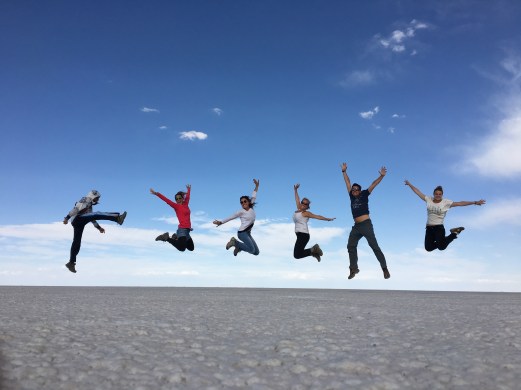
The next morning we grabbed some food at the market and boarded our tour van to see the flats. Our group had six people plus a short and surly guide. The group was great, there were three Spanish-speakers from Spain and Argentina who all met in Dublin, and a quieter German girl traveling on her own. On day one we stopped at a train graveyard nearby and then went on to explore the salt flats, which are vast and incredible. Resembling a pure white desert, you can see for miles in any direction with mountains peaking up at the edges. We stopped at Incahuasi (house of the Incans) which is a cactus island in the middle of the salt dessert and where the Incans had previously settled, believing it was a holy place. Being there, you can certainly understand how they might think this. I made friends with some lamas before heading on to take the oh-so-touristic photos using the distance distortion of the white grounds. When in Rome! We spent the night in a hotel made almost entirely of salt (save the beds). Even the tables and chairs were salt (ironically, the food was a little bland). It was among the most unusual places I have ever slept.


img_4672528

On day two, we left the salt flats and continued on through the desert, reaching an altitude of 5000 meters. I decided to skip the altitude pills this time and felt much better. We drove through reserve nacional de fauna andina Eduardo Avaroa, where we saw lagoons with anywhere from a handful to thousands of flamingos. We saw plenty of lamas and alpacas. We visited the Laguna Colorada which is a large flamingo-filled lake that is a rusty red colour. We stopped for the night at a more modest, but pleasant, hostel where we watched the sunset and then watched the stars from a hot springs basin.

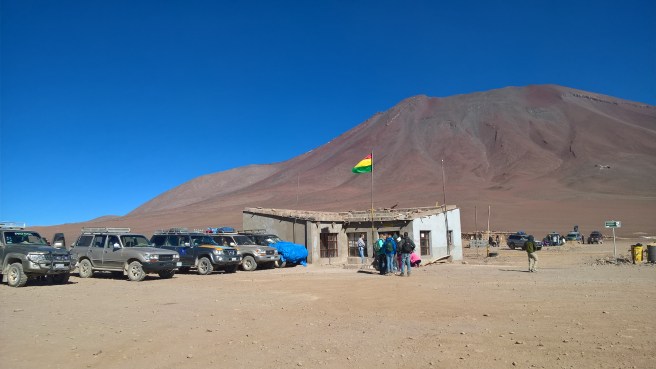
The next morning, we stopped at a lake that is supposed to be emerald green, however, as the wind wasn’t cooperating, it just appeared to be an ordinary lake. We reached the end of the trip the border of Bolivia and Chile, where we had arranged through the tour operators – and paid for- a transfer to San Pedro de Atacama. However, when the shuttle never arrived, our tour guide (did I mention I didn’t like him?) said it wasn’t his problem and was set to leave us there in the desert with no option onward to a town. Money aside, this was a scary and dangerous prospect and I got vocal about it. I don’t think Jasper has ever seen me yell at someone but something snapped and I lost it. Eventually, the “guide” begrudgingly arranged for us to take the last available seats on the last bus out of there for the day. It was a relief but an exhausting morning. I looked at other reviews for this trip online and found that our experience was, in fact, far from the worst. Many people mentioned that their drivers were not only rude but also drunk and some were even physically abusive.

wp_20161108_09_30_36_pro

Bolivia – you are incredibly beautiful but you need to step up your tourist game in a big way. It’s a wonder that so many people still come through. We certainly got the impression that it is assumed tourists would come regardless, so they can both charge whatever they like and have no obligation to be friendly or helpful. And there is also the assumption that tourists have endless resources to spend on travel. Needless to say, our salt flats guide did not get a tip!

One way or another, we had made it through Bolivia and were excited to start our Chilean adventure. ❤


Chapter Twenty Two: Bolivia Pt. 1 (La Paz & Rafting the Rainforest)

Getting around in South America is not as easy, or inexpensive, as you might think. The continental flight game over here has nothing compared to Europe’s answer of Ryan Air and Easy Jet. From Cartagena, we flew to Bogota, then Santiago (to where we will soon return), then La Paz. It was a long overnight journey, spent mostly in cold and uncomfortable airports when we arrived, at last, in La Paz.

At an altitude of over 3500m above sea level, the atmosphere took some getting used to. La Paz is also essentially a basin where the buildings rise up the mountains surrounding it, until you reach El Alta. Our hotel was on one of these steep hills, so something as easy as going to the minimart and back would leave us completely winded. We took the altitude pills that I brought, but soon noticed that our feet and hands had strong and sporadic bouts of pins and needles. I also felt completely wiped – a fact that I cannot be sure whether to attribute to the altitude or the pills. Needless to say, this took away from our enjoyment of the city a bit. I should say, though, that I don’t think we would have been enamored with La Paz in any case. It felt a bit cold and seemed to lack some focus as a city. We explored, but sadly, on our full day in town, all the museums were randomly closed because a select group of administrators had chosen to celebrate the day as a pseudo-independence day, though the rest of the country had chosen a later date. What we did enjoy were the traditional outfits of the aboriginal peoples, which were quite typical of the andes. That, and the $3 lunches of rice and minced beef with egg.

We made the best of it and took a half-day trip out of the city to the other-worldly urban park aptly named Valle de la Luna (Moon Valley). If you can ignore the village just beyond it, the white stalagmite terrain would indeed be something you could imagine seeing on the moon.(This is also where we discovered saltenas – like an empanada but more of a biscuit texture with a stew of either chicken or beef, with eggs and veggies inside. Hard to eat without spilling, but worth the effort!)

La Paz also served as a jumping off point for a six day Amazon jungle rafting tour that we had arranged. The first day was just transport to the amazon basin town of Guanay, from where we would depart on day two. Another couple from Spain and France had also booked and so the four of us, plus our scrappy and rugged guide, Ruban, to whom hygiene was an afterthought, would be traveling for five days along the rivers Kaka and Beni, on a homemade raft, until we reached the jungle town of Rurranabeque. When I say raft, I mean it in the most primitive sense. We all huddled on four square meters of branches and rubber tires. When we first saw what we would be taking, I think we all wondered why on earth we had decided to pay actual money to spend five days on something that Tom Hanks had built on Castaway. But we did. And the days were hot. Very hot. We purchased and wore sombreros to cover as much of ourselves as we could, and wore long shirts, socks and pants as we baked in the Amazonian heat. We swam in the brown water when we could to cool down, we ate fish that we caught and fruit that we picked. We camped in smelly little tents and wore mosquito netting from dusk until dawn to ward off the insanely adamant sand flies more than the mosquitos, none of whom seemed to mind our 30% deet, in which we cloaked ourselves.


On day four, we encountered a heavy storm and paddled through the rain until we found a vacant hut used by aboriginals to collect fruit. We made a fire, put on semi-dry clothes and slept on a bamboo table with mosquito nets around us while the thunder and lightning crashed on around us. In the morning, we were happy to see that a) the rain had stopped and b) the hut was still in one piece. Damp, dirty and tired, we were happy that this would be the day that we arrived in civilization. We floated into Rurranabeque in the early afternoon, desperate to shower and eat a meal prepared with clean hands. We were also happy to find that the hotel we had booked had – luxury of luxuries – a pool!

Once we cleaned off, the four of us met down there and shared some beers and reflected on the trip. Trying as it could be, we did have amazing moments with serene views of the rainforest, floating peacefully down the river. When the sun was behind a cloud, we could relax and appreciate the beauty of the amazon, the toucans flying above, the capybaras on the shore, the vastness of the wilderness. I would say that this trip was once in a lifetime… in both the sense that I never need to do it again but also in that it was an amazing opportunity to experience the rainforest in a unique way and I’m very thankful that we chose to do this. ❤