Chapter Twenty-Eight: Argentina Pt. 3 (Buenos Aires)

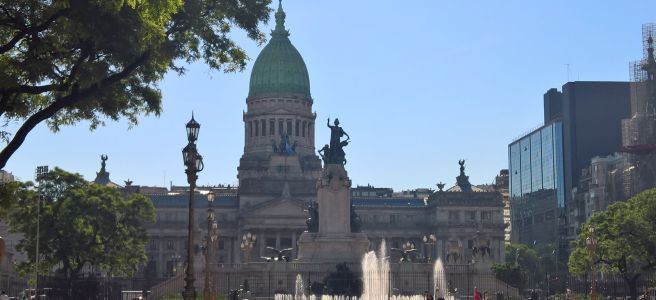
The best word I can use to describe my initial impression of Buenos Aires is grand. Arriving at the seaport via ferry, the boulevards were large and the streets were multi-laned and massive. There were parks, statues and works of art that dotted the trail to our hostel and people everywhere. My overall opinion changed as we spent the next week in this city, exploring the lavish Recoletta neighbourhood, the colourful and vibrant La Boca, the always-busy and usually seedy Monserrat, the ultra-hip San Telmo and some of the poorer areas which were just around the corner from the affluence. In short, Buenos Aires has some of everything. And the upper class is in an entirely different league that the middle and lower.

wp_20161228_12_11_50_pro

We spent the first two days on our own actively trying to do and see nothing of importance! Jasper’s parents (Jan and Annemie) were arriving on the 29th for a short but wonderful visit and we wanted to save all the best sightseeing for when they arrived. We ran some errands, ordered a super-pancho (hot dog with chips that is sold everywhere in Argentina), checked out the pub scene and searched fruitlessly for sushi for two days. But we reasoned that it has been and would continue to be a busy journey, so some downtime is nothing to feel overly guilty about.

When Jasper’s parents arrived, it felt really nice to be with family. We did some sightseeing (they had organized a half-day tour),  we went to a tango show, walked around and went to the MALBA museum, but we also just took lots of time to sit on patios and relax and catch up. We stayed in a beautiful hotel and had delicious food, and for four days, we forgot that we were dirty backpackers on a budget. It was heaven.

We had New Years’ Eve dinner at a restaurant around the corner from the hotel and it was entertaining (they had dancers) and delicious – a great way to begin 2017! From our hotel room, afterward, Jasper and I watched the fireworks all over the city of Buenos Aires.

img-20170109-wa0020

When Jan and Annemie left on January 2nd, we both felt very ready to move on as well. We felt that we had spent a good amount of time in South America and had a good feel for the area. We have seen so much and traveled so far in our time here that it is hard to believe that it was only three months. But we were both excited for the next part of the adventure. The next day we would be flying to Cape Town (via Brazil and Angola) to kick off a month in Southern Africa. We spent our last night in Argentina doing a tango lesson, which felt like the perfect way to cap off that part of the world.

66c64295-a851-4018-b7aa-e3c75ada40ee

Happy New Year!! ❤


Chapter Twenty-Six: Argentina Pt. 2 (Mendoza, Cordoba & Iguazu)

Wine and meat. That is what Argentina is known for and no place better demonstrates this than the Malbec capital of Mendoza. Argentina is the fifth-largest wine producer in the world, specializing in Malbec, which is predominantly produced in the vineyards of Mendoza. The region is the main producer of Malbec worldwide. I have explained that we love us some quality culture, and if that happens to mean sampling many different wines, I will do it, for the cause. We booked an afternoon tour which took us to three very different wineries in the region, as well as one olive oil and balsamic vinegar production centre, for tours and tastings. It was quite nicely done as it gave us a chance to see the different types of facilities (from old and rustic, to massive plantion, to super modern) and different wines.

The city of Mendoza is mid-sized but a day of walking around the streets and the large park is really enough. We spent some time sitting outside, enjoying the weather and the wine, on patios along the main promenade and, of course, we had to go out for authentic Argentine BBQ – “Asado.” We heard that asado in Mendoza is unique as the grill is heated with woodchips, rather than charcoal. I’m not sure I could taste the difference, in any case, but it was reason enough for us to try it! (Vegetarians, stop reading here.) We ordered the chefs plate, which was a heaping platter of all different sorts of meat (along with a salad bar and caramel flan for desert). It was a good first asado, because we got a good idea of what to order for next time. This one came with pork, beef ribs, flank steak, black sausage, white sausage and a coiled bit that was some sort of organ, I suppose, but too chewy for me. This paired well, of course, with a bottle of local Malbec.

Not so far from Mendoza is Cordoba, Argentina’s second-largest city. We arrived here following a 22 hour bus ride from Bariloche, in the lake district. The bus was nice and even served warm meals and showed movies in English. Unfortunately, there were also some very rambunctious children and a baby that threw up twice just behind us. “All part of the adventure!”

We walked the 40 minutes to the AirBnB that we had booked, only to find out it did not exist. Or, rather, it did, but was another 300 km away and a glitch with the site showed it listed in Cordoba. We found wifi and booked another room in a hostel and got there to find out that they were without electricity and water. Discouraged, we booked yet another hostel room, which took us back, in a giant loop, almost to the bus station where we began. We arrived to hear that the room we booked was not available, but we could sleep in the dorms, where there also slept literally the loudest snorer I have ever encountered, as well as a bunch of biting insects in my bed, which kept me up all night long. Needless to say, we found a fourth (!!) hotel for the next two days, and I am happy to report that it was quite pleasant.

Rough start aside, Cordoba is a very nice city to walk around in. There are plenty of beautiful churches and cathedrals, an interesting park celebrating their bicentennial with colourful rings, a nice central plaza and a very lively neighbourhood called Guemes that was bustling at night, with restaurants, patio bars and an artisan market. We went there for an evening and Jasper surprised me with a bottle of champagne. 🙂 It was also 25+ degrees and sunny, so we spent our days just rambling along, stopping at patios, making nice meals and taking it easy.

Following Cordoba, we took our second last overnight bus trip in South America (the countdown was on!) to the northeast sliver of Argentina, which borders both Paraguay and Brazil, called Puerto Iguazu. It’s really an amazing part of the continent as you can walk to the riverfront and literally look out to both bordering countries, which are just over a stone’s throw away. Below is a photo taken from Argentina, with Brazil on the right and Paraguay on the left.

But the real spectacle to see here were the Iguazu falls, which comprise the largest waterfall system in the world. Knowing that fact is one thing, but seeing them for ourselves is quite another. The scope of them was so magnificent, it truly took my breath away at first sight. Both Jasper and I agreed that this was among the most fascinating sights we had seen in our lives. I suppose that makes the bus trip worthwhile…

The photos speak for themselves, but even these cannot truly capture the magnitude. If you have the chance to visit, from either Brazil or Argentina (as the falls run between both countries), do it! We also met some furry friends in the park.

Aside from the falls, there is little to do and see in the town itself, but prices for rooms were low and just about every hotel in this hot, sticky city comes with tv, air con and a pool. Ours even had two! They also had a BBQ buffet and there was a cute little restaurant down the road that did daily lunch specials so we took advantage of some down time and worked on nothing but our tans for a few days. ❤


Chapter Twenty-Five: Argentina Pt. 1 (Tierra del Fuego & Patagonia)

Life is impossibly beautiful these days. We crossed over from Chile to Argentina in the large archipelago on the southern tip of both countries known as Tierra del Fuego: Land of Fire, named so as, when it was discovered by a Portuguese explorer in 1525, the explorer first saw the many campfires on the land, tended to by the aboriginals.

It is not an exaggeration to say that everything has been stunning since. On a ferry ride during the journey, we saw small black and white dolphins jumping beside the boat. We arrived in Ushuaia in the evening and went to our AirBnB which was a cozy apartment about a 45 minute walk from the city centre, along a dirt road with snow-capped mountains jutting up in the background. We explored the city the next day which, despite the cold, was incredibly pretty. Colourful houses, horses, the Beagle Canal waterfront leading out to the South Pacific, and mountains; it was like something out of movie. I believe this was nicer than any Alaskan city we have seen. Add that to the fact that it also happened to be the end of the world, save icy Antarctica (which was only 1000 km away), it made it a truly magical destination.

It is no surprise, then, that it was also quite pricey. But we decided to share some king crab crepes and local beers and enjoy the moment.

wp_20161127_12_47_12_pro

The next day we arranged a tour out by minibus and then by an insanely bumpy boat (I still have bruises) out to an island which hosts several colonies of penguins. Penguins!! There was one king penguin, several gentoo penguins and hoards of magallanic penguins. The latter were the ones which we were able to see very close up. They were walking all around us and not very shy. It was amazing – they are such fascinating creatures! They walk around together like businessmen having a meeting on the fly “…that’s what Rockefeller said but the supreme court is not swallowing it.” It was a special day.

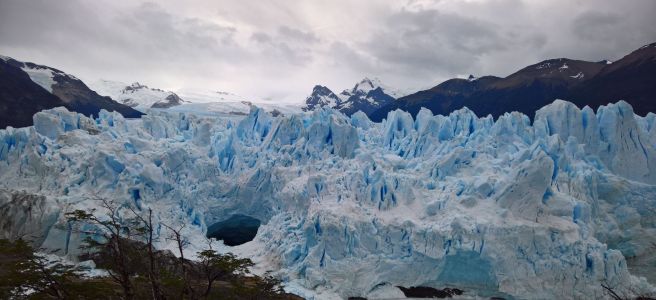
From here, the plan was essentially to head north in Argentina until we hit Iguazu falls. So our next stops were El Calafate and El Chalten, both in the Patagonia region. The highlight of El Calafate was the Perito Moreno glacier, which lies about 80 km out of town. We took a bus there, which drops you off for 4 hours before taking you back to the town. Having seen many glaciers before, we wondered if 4 hours to stare at this one in particular would be quite a bit longer than necessary, but it was not at all. The scale of it alone is breathtaking. Up to 70 meters in height, several km long, you can only see a small portion of it, which is still enormous. The park is very well done (which you would hope at $30 a person), and they have a labyrinth of walkways so that you can get up fairly close to the glacier at different vantage points without feeling swarmed by the other tourists. Right before leaving, we saw a massive piece of ice break free from the glacier and crash into the water, which was both incredible and sad.

The town of El Chalten is only 31 years old (same as me), and was created to give backpackers and trekkers a place to stay within Los Glaciares National Park as a jumping off point to hit the trails. So it is very picturesque, but entirely touristic and overpriced. We did one shorter hike to a waterfall and one full day hike which was 20 km roundtrip and peaks (pun intended) with a mountain climb to get a gorgeous view of a secluded glacier-fed lake in the mountains. The drawback was that it was quite windy, cool, and rainy as we made this ascent, but the view proved worthwhile.

As I write, we are heading, via 23 hour bus ride, to the lake district, in northern Patagonia, where we hope to find some fresher produce (as we are getting slightly tired of boxed wine and tomato pasta), lower prices and less wind. But it has certainly been an incredibly couple of weeks.

img-20161231-wa0014

We arrived, tired and cramped, in the small Swish chalet-styled ski town of Bariloche. The town is situated in the middle of hundreds of stunning vistas and the weather was a very comfortable 20 degrees and sunny. Bariloche is a mid-sized city and has everything you need to make or buy a decent meal, which is a nice change of pace from the south. Outside of ski season, most tourists use it as a jumping-off point to do the seven lakes drive (camino de los siete lagos), which takes you through a handful of small towns and is known as one of the most scenic highway drives in the country.

On our first full-day, we explored the town, which mainly consists of seeing the church and the chalets and then eating chocolate and drinking craft beers (ever the eager culturalists that we are) and then we found an agency to book a tour of the lakes and small towns. This can be done in a day and they are meant to pick you up at reception. We then got a hearty amount of asado (BBQ meat) and a box of wine and went to bed relatively early, so that we could get picked up at 8:00 a.m. for our tour. When the mini-bus never arrived, we went back down to the agency to discover that a) they had listed the wrong hotel and b) the bus had already left for the day, we were a little upset. We had already bought an onward bus ticket for the following day, thinking we would have seen all that there was to see, and it couldn’t be extended, so we were unable to do the tour a day later. In any case, we wanted to make the most of it, so we picked one of the small towns, Villa la Angostura, and bought a regular bus ticket. We covered some of the scenic drive and saw a few of the lakes. The town itself, though kitschy and overpriced, is situated on a beautiful lake, with two beach fronts, so we spent a couple of hours just exploring and hiking around.

I think we were able to get a good sense of the environment and I do imagine that the other small ski towns on the route would have been quite similar (which google image confirmed).  But it might mean that we need to go back one day. Maybe in the winter! ❤