Chapter Twenty Two: Bolivia Pt. 1 (La Paz & Rafting the Rainforest)

Getting around in South America is not as easy, or inexpensive, as you might think. The continental flight game over here has nothing compared to Europe’s answer of Ryan Air and Easy Jet. From Cartagena, we flew to Bogota, then Santiago (to where we will soon return), then La Paz. It was a long overnight journey, spent mostly in cold and uncomfortable airports when we arrived, at last, in La Paz.

At an altitude of over 3500m above sea level, the atmosphere took some getting used to. La Paz is also essentially a basin where the buildings rise up the mountains surrounding it, until you reach El Alta. Our hotel was on one of these steep hills, so something as easy as going to the minimart and back would leave us completely winded. We took the altitude pills that I brought, but soon noticed that our feet and hands had strong and sporadic bouts of pins and needles. I also felt completely wiped – a fact that I cannot be sure whether to attribute to the altitude or the pills. Needless to say, this took away from our enjoyment of the city a bit. I should say, though, that I don’t think we would have been enamored with La Paz in any case. It felt a bit cold and seemed to lack some focus as a city. We explored, but sadly, on our full day in town, all the museums were randomly closed because a select group of administrators had chosen to celebrate the day as a pseudo-independence day, though the rest of the country had chosen a later date. What we did enjoy were the traditional outfits of the aboriginal peoples, which were quite typical of the andes. That, and the $3 lunches of rice and minced beef with egg.

We made the best of it and took a half-day trip out of the city to the other-worldly urban park aptly named Valle de la Luna (Moon Valley). If you can ignore the village just beyond it, the white stalagmite terrain would indeed be something you could imagine seeing on the moon.(This is also where we discovered saltenas – like an empanada but more of a biscuit texture with a stew of either chicken or beef, with eggs and veggies inside. Hard to eat without spilling, but worth the effort!)

La Paz also served as a jumping off point for a six day Amazon jungle rafting tour that we had arranged. The first day was just transport to the amazon basin town of Guanay, from where we would depart on day two. Another couple from Spain and France had also booked and so the four of us, plus our scrappy and rugged guide, Ruban, to whom hygiene was an afterthought, would be traveling for five days along the rivers Kaka and Beni, on a homemade raft, until we reached the jungle town of Rurranabeque. When I say raft, I mean it in the most primitive sense. We all huddled on four square meters of branches and rubber tires. When we first saw what we would be taking, I think we all wondered why on earth we had decided to pay actual money to spend five days on something that Tom Hanks had built on Castaway. But we did. And the days were hot. Very hot. We purchased and wore sombreros to cover as much of ourselves as we could, and wore long shirts, socks and pants as we baked in the Amazonian heat. We swam in the brown water when we could to cool down, we ate fish that we caught and fruit that we picked. We camped in smelly little tents and wore mosquito netting from dusk until dawn to ward off the insanely adamant sand flies more than the mosquitos, none of whom seemed to mind our 30% deet, in which we cloaked ourselves.


On day four, we encountered a heavy storm and paddled through the rain until we found a vacant hut used by aboriginals to collect fruit. We made a fire, put on semi-dry clothes and slept on a bamboo table with mosquito nets around us while the thunder and lightning crashed on around us. In the morning, we were happy to see that a) the rain had stopped and b) the hut was still in one piece. Damp, dirty and tired, we were happy that this would be the day that we arrived in civilization. We floated into Rurranabeque in the early afternoon, desperate to shower and eat a meal prepared with clean hands. We were also happy to find that the hotel we had booked had – luxury of luxuries – a pool!

Once we cleaned off, the four of us met down there and shared some beers and reflected on the trip. Trying as it could be, we did have amazing moments with serene views of the rainforest, floating peacefully down the river. When the sun was behind a cloud, we could relax and appreciate the beauty of the amazon, the toucans flying above, the capybaras on the shore, the vastness of the wilderness. I would say that this trip was once in a lifetime… in both the sense that I never need to do it again but also in that it was an amazing opportunity to experience the rainforest in a unique way and I’m very thankful that we chose to do this. ❤

Chapter Twenty One: Colombia

We arrived in Bogota in the evening, after a full day of travel that began with a 3:30 a.m. wake up time.  By the time we got to our accommodations (I use this word as I think we have walked a fine line in South America where we stay neither at hotels or hostels but somewhere in between), we were pooped. First impressions upon trying to communicate with the ho(s)tel manager was this: We most definitely do not speak Spanish. Maybe we had gotten by with our “resort Spanish” in the past, but here, in South America, we were useless. Following some charades and pictionary in lieu of dialogue, we were given a map of the city with the neighbourhood of Candeleria at the center and the word ‘NO’ scrawled across all surrounding areas. It was day one and we were not looking for trouble, so we would happily oblige.

We scoped out the ‘yes’ area and found a quaint restaurant called El Gato Gris where they had live music playing while we ate (ceviche!) and ordered a celebratory beer. Part Three of the trip around the world had finally started: South America!

We spent the next day meandering around Bogotá; the palace of justice (which the FARC had notoriously attacked on the orders of Pablo Escobar), the presidential palace, the beautiful gold museum and the streets in general, taking in the sights, sounds, and tastes. Food was cheap and delicious, so we ate a lot that first full day – empanadas, pastries, pasta and the national dish of bandeja paisa. Likely too much, as it ended with some stomach issues.

The next day we flew to Santa Marta and grabbed a taxi to the casually dirty and underdeveloped beach town of Taganga. The combination of an early flight and little else to do made it a good day to spend lazing at the beach. Unfortunately, hurricane Matthew had just come through and the water itself was not especially clean. But the sun was hot and the beer was cold and all was right in the world. We were really just here as a jumping off point for Tayrona National Park the following day.

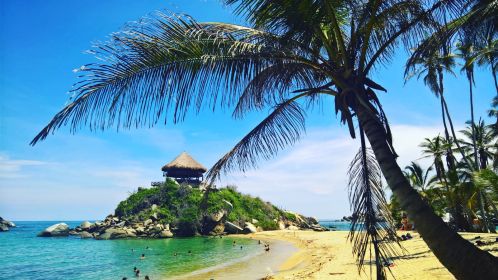
Nestled in the Sierra Nevada jungle, visitors and locals alike flock to Tayrona for the beaches. There are several of them and you hike through jungle paths to arrive at them, with the first being desolate and beautiful, though closed to swimmers due to a strong riptide. The beaches seem to get progressively nicer (and swimmable) as you walk further and, coupled with the 32 degree heat at 89% humidity, it is all you can do not to jump right in with clothes on.  We stayed in the only ‘hotel’ in the park, near the entrance, so that we could have two days there without taking the long bus back to the closest city. The hotel was a highlight in itself with open walls and white curtains for privacy, a small stone washroom and shower in our room and mosquito netting over the bed. At night, the jungle came alive and there was such a cacophony of birds, animals and insects that it woke me up. In the morning, we were served a fresh breakfast while monkeys played in the trees beside us. We were very charmed.

img-20161009-wa0012

We navigated the intra city busses and made our way to Santa Marta, where we had three stiflingly hot and sticky days and nights. Apparently, most of the colonial heritage was ravaged over the years by pirates so after you check out the church and go for a seaside stroll, you’ve really covered the bulk of it. We mostly stayed in the area of our ho(s)tel, which was slightly out of the city centre. Lunch is the main meal of the day and $3 CAD will get you a soup and juice, as well as a meat platter with rice, beans and platanos (mashed and fried plantain, which is a staple). We also found loud music blasting out of corner store-type places, where they had tables and chairs outside and sold 1L beer bottles for a dollar fifty. We spent an evening there and then made it ‘home’ to catch the second presidential debate, after which, we heard what sounded like gun shots outside of our window. We reasoned it was probably fine and cautioned ourselves to watch less Narcos while staying in Colombia, but all the same, we decided it was probably best if we were in before dark the next night.

The highlight of our time in Colombia was, without a doubt, our four day/three night hike into the Cuidad Perdida: The Lost City of the Tayrona indigenous people, which dates back to 800 AD. The city itself, which you reach on the morning of day three, is nearly, if not, as vast as machu picchu and  far quieter to visit, with our group of sixteen, which was one of only three groups to reach it that day.

The trek to the lost city was both rewarding and harrowing. Approximately 50 kilometers round trip, through jungle-encased mountains, with an average temperature of 30-35 degrees, plus humidity. On top of this, we were treated to a tropical thunderstorm with rains so hard that it felt as though we were climbing a waterfall at times and the clay earth turned slack with mud where I was especially prone to slipping on – and in- on more than one occasion. So, a decent amount of physical fitness is required to take on this challenge. However, the work was worth the reward for the stunning mountain vistas, beautiful waterfalls, exotic butterflies and birds, aboriginal settlements and the general knowledge that we were in the middle of the jungle in Colombia doing something that we would remember for the rest of our lives. The group we had was a fantastic bunch of people and we had amazing guides as well, organized through Magic Tours. We had poorly understood when booking and were under the impression that meals along the way might be limited to fruit we picked off trees and some nuts. We were extremely mistaken, as breakfast, lunch and dinner were huge plates of hot meat, eggs, pasta, soups, fresh fruit, and of course, rice, beans and plantain. We also expected to be sleeping in hammocks (and some groups did) but were again upgraded to real beds – dorm style and bunk beds, but in the jungle with no civilization for miles, we were impressed. All in all, this was an amazing experience that we would recommend to anyone looking for a unique adventure in Colombia.

The amount of mud that we washed off ourselves when we got back to Santa Marta was second only to the number of bug bites on our legs. A shower, hot meal and change of clothes were all we could manage before we fell, exhausted, onto our beds to sleep for the night.

We made our way to the colonial city of Cartagena the next day with new friends from the Lost City trek from Cologne, Germany. After some brief confusion upon arrival, we realized that we had actually booked a room about as far away from Cartagena city centre as you can get while still being able to claim that you are in the greater metropolitan area. No matter though- we cabbed to our ho(s)tel, showered, changed, and headed back out to meet our friends in the bustling neighbourhood of Getsemani, where most of the nightlife happens. You could make a night of just walking around the street here, popping into the bars here and there for a drink. The area was very lively, with performers, music and some of the best street food I have ever experienced. We found here Columbia’s answer to poutine: Salchipapa. This was a base of French fries, with sliced sausage and pulled pork on top, three or four different sauces and topped with hickory sticks chips. Just thinking of it makes me hungry again… Anyway, the four of us went to Havana Bar, a popular place for both tourists and locals, and danced to Cuban music while sipping on mojitos.

The next day, we explored the city, which is beautiful. Lined by ramparts, the seaside historic centre is very colourful and art-filled. We spent a few hours at a museum for the Spanish Inquisition, which took place in Cartagena, among other sites. The only problem with a town being so beautiful is that is also makes it a hot-bed for tourists and those trying to pander to them. We decided a day was enough to see what we wanted and eat some fresh fish.

We spent our last day in Colombia relaxing in our little neighbourhood, where we were the only gringos in sight, taking in some local food and a salsa club and getting ready to move on to Bolivia. ❤

Chapter Twenty: Home Again, Home Again, Jiggity Jig

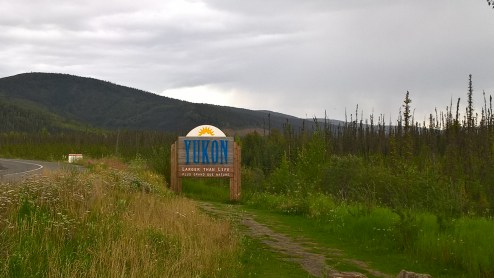
The way home began with a stop in Watson Lake, Yukon at Sign Post Forest, which is exactly what you would expect: rows upon rows of signs tacked twenty high. Afterward, we went down BC to Liard, which boasts beautiful hot springs in a natural setting in the woods. They were certainly the prettiest we have seen on this trip. They also turned out to be the smelliest, and, as it was in nature, there were no showers for afterward. This isn’t a problem for those going home after the springs, but for two vagabonds living out of a car, it was not pleasant for us. About 400 km south down the Alaskan highway, someone was wise enough to have a shower stand beside his restaurant, charging an arm and a leg per shower, which we happily paid to no longer smell like egg. We completed the Alaskan highway, passing many bison en route, at Dawson Creek and crossed over into Alberta.

We spent the next week national park-hopping, from Grande Cache (where we spotted a cougar), Jasper National Park (our third and final hot springs and my Jasper got to take a photo with Jasper the bear), Lake Louise and Banff. We took the Icefields Parkway south which is so picturesque and serene. When we did arrive in Banff, we rolled the car into the first garage we found, sputtering and grinding. Some not-so-cheap repairs later, and we were on our way again. We stopped briefly in Kananaskis park, but it was too cold and rainy for a hike so we drove on to Calgary, where we both had a dose of culture shock. We had not seen so many lights, cars and people in weeks, and, frankly, it was overwhelming. We stopped for a beer and a burger (both great) and continued east to Medicine Hat, stopping to park overnight under a very starry Saskatchewan sky.


We took the TransCanada highway back for most of the journey, making stops and detours here and there, whenever we saw something we wanted to explore. We visited Regina, spent an afternoon in friendly Minnedosa, Manitoba, and went to the pristine but mosquito-ridden Lake Manitoba shores before stopping to visit a friend in Winnipeg.

I had been to Winnipeg before with work but always in the cooler weather. We really enjoyed the city, walking along the forks, Saint-Boniface, and the old buildings in the financial centre. We stopped for brunch at Stella’s in Osborne Village and picked up cookies by George and then met my friend and her partner for dinner and drinks and stayed over at their lovely home.

We started the final stretch the next morning, stopping for coffee (tea for Jasper) and cinnamon buns at Tall Grass before heading into my home province of Ontario.


We followed the north shore of Lake Superior homeward, popping into Kenora, Thunder Bay and Sault Ste Marie en route, and stopping at the Terry Fox monument (as well as others), Kakabeka Falls and going for a hike in Sleeping Giant park.

Our plan had been to visit Killarney park for a couple of days, then Manitoulin island and take a ferry to Tobermory, which would be our last stop. However, when we did get to a very rainy Killarney, we realized that you can only enter from the east side and we had overshot the route to Manitoulin by about three or four hours. At this point, Toronto (our final destination) was equally far away. We hemmed and hawed about our options, but were not looking forward to more rainy camping or sleeping in the car, so we decided to save the last two stops for a long weekend in the future, and headed home for our second and final pit stop on our year (or so) of adventure.  ❤

Chapter Nineteen: Top of the World

We arrived in Denali National Park on a seasonally cool afternoon. We found a camp spot which was right above a small river, which you could hear through the night. Denali is fairly centrally located in the state of Alaska and you really get the feeling here of being out in the wilderness, with nothing around you but mountains and plains for days. No electricity or running water. We explored a bit on our first afternoon, getting ice cream and a few beers for the fire. We did two more full days of hiking, where we hardly ran into another soul. At points, you could see for miles ahead with not another person in sight. It was beautiful. Cold, but beautiful. We spent our final day in the park on a bus trip which takes you as far into the interior as the roads will allow. On the bus, we spotted grizzlies, black bears, lynx and elk, among others. If you go anywhere in Alaska other than the southeast peninsula, I would say that Denali Park is the place to go. Being August, we learned that summer had already come and gone, and we were well into fall. Although it was cool, the colourful foliage made it well worthwhile. As a park guide told us, here there are four seasons: almost winter, winter, still winter and construction. I guess we made it for the former!
We treated ourselves to one more salmon bake on the way out and headed on. Blasting the heat in the car, we headed further north to the Northern Lights Capital of the world; Fairbanks, Alaska. Sadly, as in Iceland, we were not in the height of the lights season and it was cloudy to boot, so we did not happen upon the lights. Fairbanks is a unique and slightly run-down city, best known as an army base, and sitting just south of the arctic circle. we toured the town and got a motel room and had a cozy night in.
 
The next day we headed eastward again, through the perma-Christmas town of North Pole (aptly named to attract toy manufacturers, though it didn’t have much success) and along the Top of the World Highway. The TOTWH is closed in the winter, so any towns (and I use that word loosely) situated on the road are left to stay home through the winter or snowmobile several hours to the nearest watering hole for supplies. A perfect example of this is Chicken Alaska, annual population: four. An old gold dredge and now a kitschy RV park in the summer, the one family that lives there year round relies on canned and frozen foods, and boiling snow for water over the harsh Alaskan winter. The town was originally named Ptarmigan, a sort of bird that resembles a chicken. When the name proved too hard to spell, let alone pronounce, it defaulted to Chicken, which has likely been a big factor in improving tourism.
 
We drove on to the US-Canadian border, which, being 9:00 p.m., was closed for the night. We pulled the car into an overlook point and slept until it opened up again. Funny thing about the TOTWH is that the whole of it is exceptionally pothole-ridden and dilapidated, save the 2 kilometer stretch on either side of the border, to create a false euphoric first impression upon entering either country.
 
We arrived in Dawson City, which we were happy to see was the Klondike town we had been hoping for since crossing into the territories. Dawson is not so much a city as a museum town, preserving the look and feel of the gold rush days (with some modern comforts, of course). The streets were unpaved and the houses were tavern-esque and just run down enough that it felt like the real deal. We went to visit the cabin of the poet Robert Service, a family favourite. It felt a bit like a pilgrimage to me, having grown up listening to my dad reciting his best works.
We went to Diamond Tooth Gerties to catch a show that evening and, between sets, we went to the Dawson City Hotel for a sour toe cocktail.
 
A sour toe cocktail is just as it sounds. Created in the fifties and likely inspired by The Ice Worm Cocktail poem, tradition has it that you order a shot and place in it a preserved human toe. You then take the shot and the toe has to touch your lips in order to receive a certificate.. and street cred, of course. Every night at Toe Time (9:00 p.m.) the professional toe administrator will sit down with you and say the rhyme, “You can drink it fast, you can drink it slow, but your lips must touch the gnarly toe.” And gnarly it was; long and purple. But – when in Rome… so we did it!
 
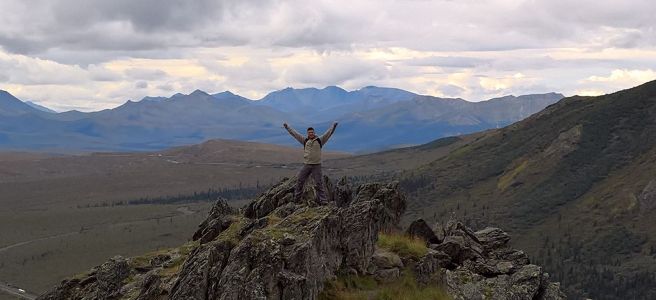
After sleeping off our toe-hangover, we drove up further north, to what really felt like the top of the world, Tombstone Territorial Park in northern Yukon. Stunning as it was remote, we really fell in love with this spot. Fall was in full swing, and there were far more bears than people in a square mile. We found a camping spot and hiked up a trail to get a better view of the scenery. We had overheard a few people discussing how active the northern lights were the night before, but, alas, we did not see any. No matter as the sprawling, vast scenery more than made up for it.
 
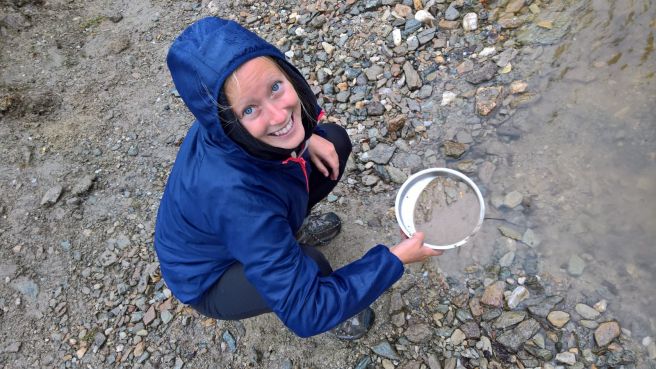
Heading on south, we stopped just outside of Dawson at a local dredge to try our hand at gold panning. We spent about half an hour in the rain sifting and shaking our dirt, but in the end, all we got was wet. And, I suppose, the memories.
img-20160828-wa0002
 
Until we came to the marge of Lake Lebarge… or rather the inspiration for the icy setting in the Robert Service poem, The Cremation of Sam McGee, which is actually called Lake Laberge. Azure waters framed in vibrant green trees, this was a lovely little camping spot. By way of context, I had been wanting to come to this spot since I was a little girl, to see how the place compared with my imagination of it. My dad would recite this poem when we went camping, with the lights out and the fire crackling, and conjure up such vivid imagery of Sam, sitting in a blazing oven. For me, coming to Lake Lebarge was definitely a bucket list item.
 
We stopped back briefly just outside of Whitehorse where my friend Agatha and her (new!) fiancé were wrapping up their own northern adventure. We spent an afternoon in the local hot springs, and an evening playing cards and games by the fire.
img-20160827-wa0001wp_20160827_11_49_42_pro
When they headed to the airport the next morning, we, too, headed on, starting the long drive back home. ❤

Chapter Eighteen: North

There are a few things you notice as you start driving north of the 49th parallel, once you’ve passed the lower cities like Vancouver (where we stopped at Momo for some sushi), Squamish and Whistler Village: The roads deteriorate, the nights get cool and the days stretch nearly into midnight. There is also an almost palpable lack of other people. You can drive the hwy 37 up British Columbia and go hours without seeing a single car. Stocked with canned ravioli, a spare gas tank and heavy blankets, we were prepared physically if not mentally. Suddenly it really felt as though it was actually just the two of us on this trip. No distractions, just an open road, increasingly large mountains and some wildlife. The first time we saw a bear on the side of the road, we drove back past him two more times. By the sixth or seventh, we shared a smile and a, “That’s nice.”
We really enjoyed the longer days. Our first night after veering north, we lit a bonfire and waited…and waited… and waited for it to get dark and then it finally dawned on us that the sun would be setting much later in these parts.
img-20161020-wa0004
 
We did notice that, once the dark had come, it was getting much, much cooler. British Columbia was tolerable, but in northern Alaska, I camped out in two pairs of pants, thick socks, a shirt, two sweaters and a jacket, hood up, sleeping bag and duvet on top. It was cold. But I’m getting ahead of myself. In BC, we stopped at Pemberton and Boya Provincial Parks, visiting the lackluster Prince George in between. The parks were beautiful and on pristine, turquoise lakes. We visited Joffrey Lakes outside of Pemberton and rented a canoe for a morning paddle in Boya. We were sometimes very lucky with our meal breaks, when we would see a beautiful scenic or lakeside pullover, to enjoy a meal with a view. We also had a lot of campfires in this part of the trip (often with roasted marshmallows and spider dogs). It felt very North American again, after four months in Europe.
 
We got into the Yukon on a Saturday and booked into a motel in Whitehorse by that evening, hungry for some entertainment and food that was not a cold salad wrap. We went to Klondike Rib & Salmon for their namesake platter and mixed game meatballs, which were delicious. We walked around the main street strip hoping for some saloon-style bar reminiscent of the gold rush era. Instead, we found a modern bar full of tourists and a hotel bar with a local act playing some live music. We stayed in each for a drink but were a bit let down and headed back to our motel to cut our losses. At least we caught a magnificent sunset at 11:30 p.m.! We would head on towards Alaska the next morning but come back to Whitehorse a couple of weeks later on our way out.
wp_20160814_20_03_18_pro
 
The road to Alaska was long and scenic, along the Alaskan Highway. We passed through Kluane Territorial Park, known for its abundance of dall sheep. The scenery was a mix of mountains, forests, lakes and glaciers. It was incredibly beautiful. We attempted to go to Wrangell St. Elias National Park but turned around at the one horse town of Chittina (with the trademark motel-restaurant-bar combination) when we realized the next three hours drive would be pot-hole ridden dirt roads and our little sedan may not have made it.
 
We drove on to Anchorage, where we booked two nights in the sleaziest inner-city campground I’ve seen. Most of the sites were occupied seasonally and it had a very rough and tumble crowd. No matter as we wanted to spend the days in the city… which proved to be more time than needed. The city of anchorage is beautifully situated. Aside from that, however, we found there was not much to do in the city itself. We walked the downtown, bought some reindeer sausage, stopped at the 49th State Brewery patio and walked the waterfront trail. We went to the Native Museum. After that, we were hard-pressed to fill the rest of the time we had allocated to anchorage. We explored the greater city hoping to find a cozy café to read in. All we found were strip malls. We were a bit disappointed as we had high expectations of anchorage after seeing beautiful Juneau last spring. I suppose it is best left for a hotel, hot meal and afternoon stroll.
 
We rode on, through Sarah Palin’s hometown of Wasilla, and toward Denali National Park. ❤

Chapter Seventeen: Once Upon a Time in the West

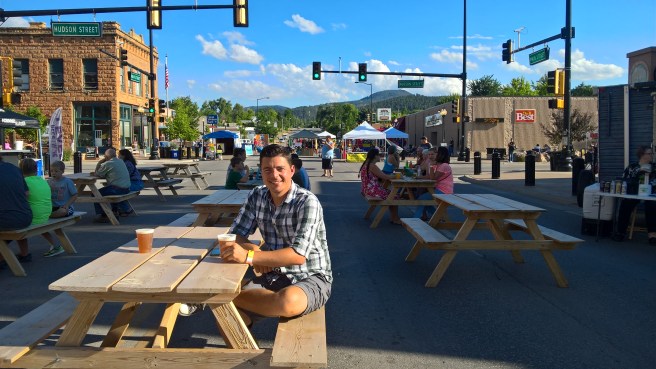
We drove about thirty minutes from Deadwood and set up camp in the sleepy community of Spearfish, as they were having “Friday Nights;” a weekly festival where they close the streets for vendors and pedestrians and a stage for live music. Despite the mostly cheesy country music covers, it was a nice way to spend an hour or so. We may have tried too hard, squeezing an extra three out of it. We popped by the local Irish pub for a pint and some live tunes after the street fest was done.

wp_20160729_17_52_06_pro

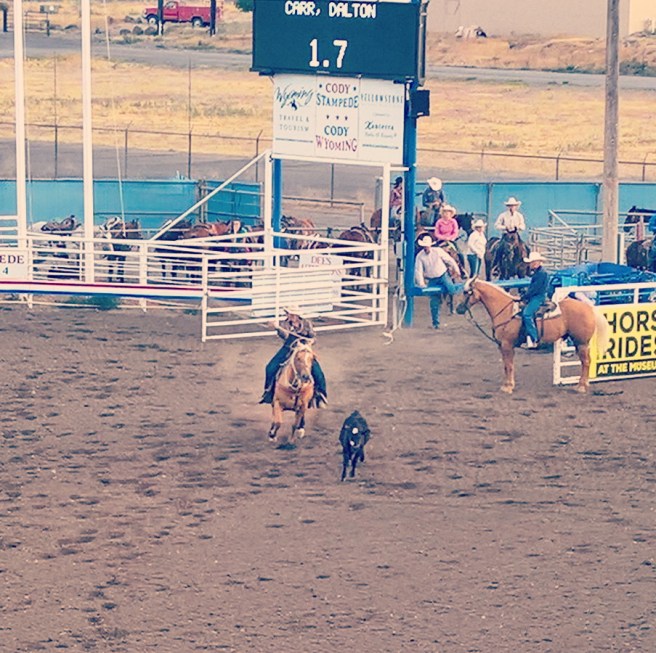
On we drove the next morning through the state of Montana and ended up in the town of Cody, rodeo capital of the west, just in time for the Saturday night show. For the life of me, I cannot imagine what would possess someone to get on top of a bucking bull, but it was entertaining to watch, along with the horse riding and lasso competitions. Of course, we began with the anthem and the lord’s prayer, as is custom in these parts. We stopped into a country music bar for a few live numbers afterward and then settled into the Walmart parking lot that would be our campsite for the night, before heading into Yellowstone Park.

 6tag_040816-144633wp_20160804_12_41_06_pro

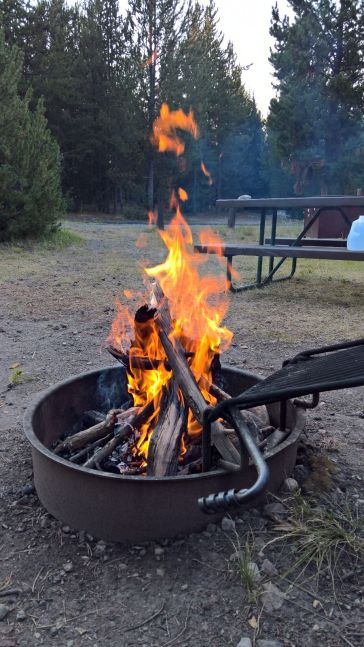
After being laughed out of Walmart in the morning for asking if they sell veggie burgers (“This is Wyoming.”), we drove into Yellowstone to spend three days, hiking the plains and visiting the thermal pools, geysers and natural landscape of this massive park, where it wasn’t uncommon to drive three hours in a day just getting around. Jasper perfected his bonfire-making skills and I my propane-stove cooking skills and we both found that the nights were much cooler than we had expected for camping but it was no doubt worth the payoff, which was a sky of a million sparkling stars.

After 3 nights of Yellowstone (which, I might add, did not have showers… something we were not-yet-but-soon-to-be used to), we were in need of a hot breakfast, motel, shower and laundry, in that order. After driving through the two horse town of Three Forks and towns with nothing but a church, hunting and ammo shop and bar with signs boasting the second amendment above all others, we ended up at a Motel 6 in Helena with a pool, which we lazed at all day and then we watched tv all night… it was heaven.


We drove up to Glacier National Park and took the ‘going to the sun’ highway through it, which was breathtaking. We had hoped to park and do a hike at some point but it was high season for tourists and every lot was jam packed. So we headed onwards, through Idaho, stopping briefly at Coeur d’Alene for another Friday evening festival, this one a bit bigger and more exciting than in Spearfish. We stopped for a drink and some bluegrass music and meandered along the waterfront before driving on.

The next stop was Mt. Ranier. Again, parking was an issue but we managed to nab the last spot up near the lodge, where the main hiking trails begin. This might have been the spot where my expectations were most exceeded so far on this trip. The hike up the mountain was absolutely gorgeous, full of brightly coloured wild flowers, streams and waterfalls, amazing mountain views, snowy patches and a glacier. We even spotted a (gummy) bear! You can climb the full mountain but it requires proper hiking equipment and takes 2-3 days so we opted for the day hike route. I rolled my ankle (again!) on the walk to the car, so Jasper decided to make it a hotel night, with popcorn and movies.

We continued on west and, when we hit the coast, dipped down to Portland, Oregon, for the morning. We arrived on a Sunday so the oddly-named Saturday market was in full swing. Jasper walked and I hobbled past some indie musicians and the donut shop (the line was around the block) and visited the food truck village for some middle eastern eats. We explored a bit but I was limited by foot so we headed back to the market for some hibiscus iced tea and then drove to the rose gardens, which were lovely and vibrant. Then back in the car we went and headed north, stopping at a drive-in cinema just outside of Seattle for the double picture show, junk food and some old fashioned romance.

Next up on our adventure was to cross on into Canada and start venturing up north as we headed into the wild.


Chapter Sixteen: On the Road

After more delays than expected, Jasper had, at long last, received his Permanent Residence card, a.k.a. our ticket to hit the road (more specifically, our ticket to be allowed back afterward).

On a hot Saturday morning, we hopped in the Volkswagen Jetta and headed southwest towards Michigan. We stopped in picturesque New Buffalo in the evening for a walk and some groceries. Due to very heavy rain and no campgrounds in site, we spent a first romantic night sleeping at a highway rest stop in our car with the seats rolled back. In the morning, we drove the last sixty miles to arrive at Chicago.

wp_20160725_17_23_54_pro1

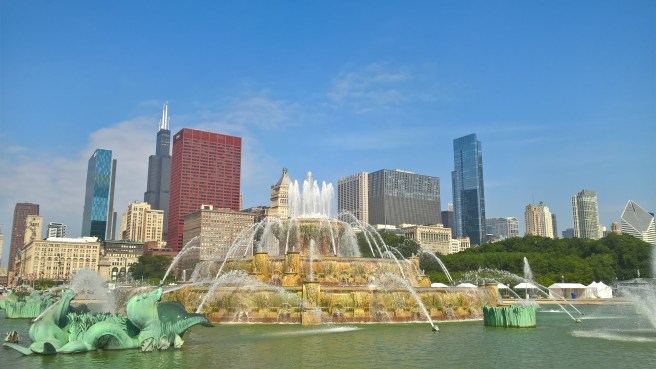
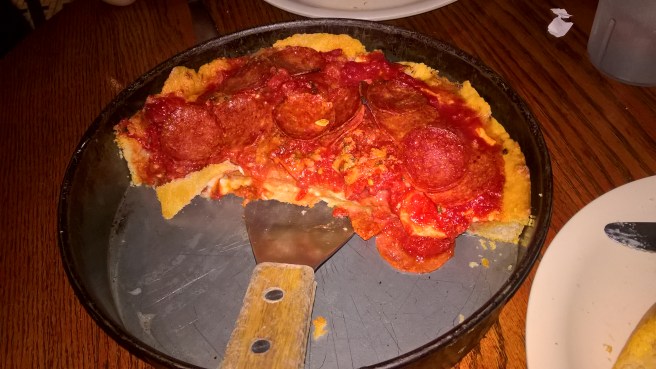
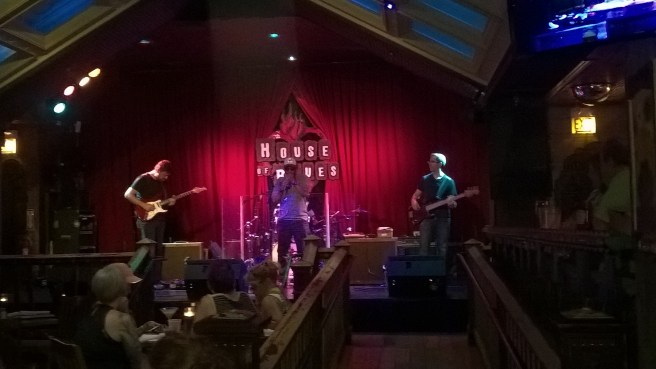
We spent the day on foot, despite to 40 degree weather. We walked through millennium park, saw the giant bean, and strolled the waterfront and river walk. When we were thoroughly spent, we went to our Airbnb for a much-needed shower and nap. In the evening, we went to the old town, got some legendary pizza at Uno (which was incredibly filling, despite its small size) and stopped at the House of Blues for some music and a beer.


wp_20160724_09_47_26_pro1wp_20160724_10_44_15_pro1wp_20160724_19_10_21_pro1wp_20160724_20_21_24_pro1

The next day, we forged on towards Minneapolis to visit a good friend, Anna, from my Korea teaching days. We made a quick pit stop at Chippewa Falls (hometown of Jack Dawson) and arrived at our destination in the evening, tired and content. We had a lovely catch up and Jasper tried his first veggie dog. The next day we explored the city which I would best describe as industrial-urban and wound up at Inbound Brew Pub chatting with the server and sampling the taps for the afternoon before again braving the heat and journeying back to Anna’s house for the night.


From there, we made our way through the South Dakota plains towards Badlands National Park (stopping briefly at an actual Corn Palace in Mitchell, SD). Here, with the rough terrain and jagged dirt peaks in layered colours, you truly feel like you have landed on another planet. There’s not much to do but walk around and take in the scenery, and that is just what we did. When the rain clouds at last rolled in, we packed up and headed to the Black Hills.

 img-20160728-wa00161wp_20160727_16_30_52_pro1wp_20160728_07_47_52_pro1wp_20160728_13_41_41_pro1

Now somewhere in the black mining hills of Dakota, there lived a young boy named Rocky Raccoon. While we did not see Rocky himself, we saw many of his furry friends, including  multiple herds of Buffalo,  deer and fields full of adorable prairie dogs, mostly concentrated in Custer state park. We also visited Mount Rushmore and the historic (and highly touristic) town of Deadwood… where we ran into some car trouble. We gave our little VW some rest and some love and (knock on wood), she’s going strong again. ❤


Chapter Fifteen: Istanbul

We had shortened our initial plans for Turkey, which had included an overnight bus to Cappadocia to hopefully catch the hot air balloons over the rocky backdrop. However, in light of the tense political climate and recent bombings, we shortened our stay to only 2.5 days in the city of Istanbul.

Sabrina and I had been a bit tense about visiting at all, given the situation, but hotels and flights had been booked and we were determined to make the most of it and not to let terrorism get its way. Besides, Istanbul had been a bucket list item for both of us for a long time.

We arrived at night, in a very busy Ataturk airport and made our way to our hotel. We immediately had the instinctive feeling of being in a very different culture. With over fourteen million inhabitants, Istanbul is one very big city. We dropped our bags and headed out for what we came for – food! 😉 We found a small outdoor patio nearby and sat for some hummus and pita, stuffed grape leaves, garlic yogurt dip, baklava, apple tea and hookah.

The next day we spent on our feet and covered as much as we could of the main attractions: The Topkapi Palace, the Hagia Sofia, the Blue Mosque and the Grand Bazaar. All were spectacular. The palace was enormous and had such rich history and the Hagia Sofia was so grand it made me catch my breath when I entered. Being in the blue mosque felt a tad invasive but at the same time it was an amazing glimpse into the religious traditions of the local people.

The whole of the city was not nearly the tourist Mecca I had anticipated and that point was illuminated when we visited the grand bazaar, which was so empty you could practically hear crickets. We spoke with some merchants there who explained that the absence of visitors was, in part, due to it being the holy month of Ramadan. A better explanation, however, was the fear of terrorism. How sad and unfair, the impact that they could have, not only on tourists who can no longer travel at ease, but on an entire economy and the livelihood of its population.

The silence in such a well known attraction was indeed eerie and we took the bait and left shortly after. But we did have a nice time sampling teas and Turkish delight and trying on scarves and shoes before we left.

We went out for some more food and, in the evening, to a rooftop hotel for a glass of wine where you could hear the nighttime call to prayer blasting off the minarets all over the city.

untitled2We took the next day a bit slower, beginning with multiple courses of breakfast at the hotel buffet, then on to the underground Roman-built cisterns that have survived centuries of wear and tear. We then went for some much needed massages and hammams (Turkish baths, which we agreed were essentially human carwashes) and then ventured to the east side of the Bosphorus river to get some durum at Durumzade, recommended by Anthony Bourdain himself. We had the lamb and beef mix, which lived up to its hype. Unfortunately, we could barely get it down as we stopped for freshly caught fish sandwiches at the riverside.

Feeling like we had pushed our luck enough, we made our way back to our neighbourhood and settled at a quiet little patio for some drinks beside our hotel before calling it a day.

The next morning, we had a generous breakfast and prepared for the journey back to Toronto. We spoke with our favourite staff member who gently chided us for being weary of a parked van the evening before. I asked him if he was concerned, with all the threats going on, which he dismissed. A few days later, after the terrorist attack on the Ataturk airport, which killed 45 innocent civilians, he wrote me to say that he had been thinking back to that question ever since. But, as we were told, “politics are a rich man’s game.” How grateful I was to be back in Canada. ❤

Chapter Fourteen: Croatia

Sorry I’ve been MIA for some time now. As my European leg of the trip wrapped up and I stopped over in Toronto for the wedding of my good friend, Susie, I lost track of this blog!! Well, you can all stop holding your breath now, I’m back 😉

So, Jasper and I left Sarajevo to take the eight hour bus trip to Zagreb on a Saturday. We spent two days together before he left on the same plane that had just brought my friend Sabrina in to take his place as my travel companion for the next two weeks.

Full of beautiful, historic (and mostly yellow) buildings, Zagreb is a walkable city as developed and modern as any of its western European counterparts. Visiting Croatia, in general, you would never know that they had been part of a nasty war in their recent past. The economy and tourism is booming! Sadly, that meant slightly busier cities, costlier stays and less cultural diversity than I had been expecting. Nonetheless, it is a beautiful country with plenty to offer.

The highlight of Zagreb was catching the first Eurocup match that Croatia played, and won, in the central square. The celebration that followed would make you think they’d won the series, if you didn’t know better. Jasper and I walked the whole of the city in a day, which I again did with Sabrina two days later. Aside from another meal of Cevapi and burek, we did not find many local specialties to eat. When it came to drinking, however, Croatians take their rakija very seriously. And, as obliging tourists in need of some local culture, I joined both Jasper and Sabrina in an uncertain amount of shots.

What followed our last night in Zagreb was a shaky bus ride to Plitvice National Park. This is a must-do in any Croatian vacation as it is truly stunning. The park  is mostly composed of cascading waterfalls and streams with several boardwalk options depending on how much you’d like to walk. We opted for the 4-6 hour route and the day flew by.

Approximately 10,000 photos later, we hopped on a bus to make our way to the small party city of Zadar. An evening and a morning was enough time to explore this artistic and lively city, where the highlight really is the sea organ, which is exactly as it sounds. Built into the boardwalk, the organ was engineered to use the waves of the sea to create music. It is both soothing and haunting – particularly at night.

From Zadar we made our way to Split, which was a tie (with Dubrovnik) for my favourite stop in Croatia.  While still very touristic, Split had a very unique feel to it and a lovely (though slightly smelly) waterfront. We happened to be there on yacht week so there were parties everywhere and lots of fun to be had. This led to a somewhat painful ferry ride to Hvar island the next morning…

Sabrina and I had been hearing everywhere about the world renowned beaches in Hvar, which, I must say, we were hard pressed to find. Mostly large rocky waterfronts, we were not overwhelmed by what we saw. We still had a great time and got the sunburn to prove it, but I would say the beaches fell a bit short of expectations. No matter though, as long as you have great company!

Our final stop in Croatia was Dubrovnik. After approximately 500 steps up a steep hill, backpacks on, we arrived at our room. The view of the harbour from our balcony was the payoff. We scooted in to King’s Landing – I mean the old city – to have some wine and explore. If you removed the tourists and ice cream signs, you would think you’d landed right in the middle ages. Dubrovnik was absolutely teaming with tourists but is a must-see if you can handle the heat. It was over 40 degrees when we went- so hot that our towels literally burnt from the beach sand, which, I guess can be considered a souvenir. ❤

Chapter Thirteen: Bosnia and Herzegovina (Sarajevo, Mostar & Almost Neum)

Where to start? We are on a bus leaving Bosnia as I write. We spent the last week here and it has been lovely.
Just driving into the country on the seven hour trip from Serbia was beautifully scenic. Bosnia is incredibly mountainous and rife with clear blue streams running through it.
We had a quick overnight in Sarajevo, to break up the journey (where we had our first Cevapi, a.k.a. Cevapci, a.k.a. Cevapcici, a.k.a. Delicious grilled veal patties in a pita with far too many onions for a romantic getaway but extremely tasty nonetheless… but I digress), then onward the next morning (after yet more cevapi as we awaited our bus) to the old town of Mostar, most famously known for its Stari Most (old bridge) in the center.

We arrived on a Saturday and it was swimming with tourists. We were lucky to find a small restaurant just tucked out the way of the busyness, with a veranda that overlooked the river passing through the town. We soon became regulars and our kindly waiter even greeted us twice with shots of rakya (“cherry for lady, apple for man”). We even ordered things other than cevapi- though not exclusively.

Mostar is a beautiful town and thrives on tourism, but after a hike up the mountain (largely on paved road) and a few ice cream cones, we had seen the bulk of it, and decided to plan a day trip to the coastal town of Neum, where we could infuse our vacation with some much-needed beach time.

Unfortunately for us, what we did not realize was that the bus to the Bosnian coast passes through Croatia en route, which is not the only way to get to Neum, but, apparently, it was the quickest. And Jasper and I, being diligent little travelers, left out passports hidden safely away in our hotels. The border officer did not appreciate our sense of diligence nor did he find our confused misstep endearing. We were told, by means of a grunt and a nod, to get off the bus upon arriving at the Croatian border. We were then interrogated, by several officers, as to how we could be so stupid as to think that we would be able to enter a country without a passport. They demanded 300€ of us for our mistake, and, when we said we did not have that much money on us (“but half, actually” -Mr. Andrews, Titanic), they threatened to take us in to the station. At this point, I started to get watery eyed (which, both Jasper and I agreed, was a strategic play) and, eventually, one of the younger officers relented and allowed us to go back to Bosnia on the next bus through, claiming “we were just [stupid] tourists.” Okay, I added the word stupid, but, trust me, it was implied. We nervously awaited the next bus, avoiding eye contact with anyone who had the authority to change their mind on this verdict, and got out of there some twenty minutes later. We arrived back in Mostar three and a half hours after leaving, forty dollars poorer and beachless, and decided we may have booked one overnight too many.

The next day we attempted to go to the public pool, only to find it closed. We consoled ourselves over some cevapi and ice cream, meandered around the town, and stopped for many ‘drink and reading’ breaks. All in all, there are much worse ways to spend a work week.

We returned to Sarajevo the next day, where we planned three nights, 2.5 days. It was the right amount of time to take things at a leisurely pace. We made a couple of dinners in with some wine and movies, and explored all that we had flagged in the town. We had a couple of walking tours of the old town. We stopped on a rainy day at a hookah bar for shisha and Bosnian coffee (which looks much better than it tastes- though apparently tradition has it that you should flip over your cup when finished and then ‘read’ the grounds to see your fortune. My fortune looked like a velocitaptor, whatever that means).

We had nibbles and bites around town and met some friendly locals and we visited a haunting yet top notch exhibit on the genocide in Srebrenica. We also visited a comically small museum on Bosnia’s role in the lead up to the first world war, situated right outside the bridge where Franz Ferdinand was famously assassinated, along with his pregnant wife, Sophie. And to boot we were there for the start of Ramadan and each sundown was marked by the shooting of a cannon

Sarajevo is a beautiful city, with a mountainous backdrop and vibrant atmosphere. The old town is a bustling meeting spot for tourists and locals alike and brimming with small coffee shops and eateries and with outdoor sofas and lounge areas. Much of the city has been rebuilt since the war, though there are still relics of it, such as bullet -ridden walls and red paint-adorned fallout marks on the sidewalks, to remind passersby of what they have endured and how far they have come. ❤